



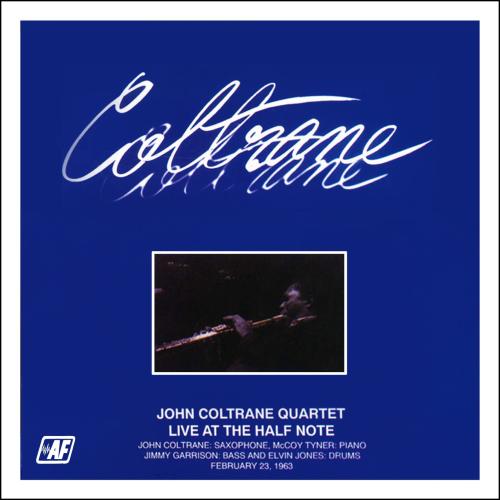
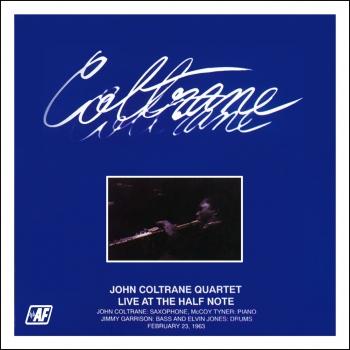
Live at the Half Note February 23, 1963 (Remastered) John Coltrane Quartet
Album Info
Album Veröffentlichung:
1963
HRA-Veröffentlichung:
09.03.2020
Das Album enthält Albumcover
- 1 Untitled Original (Live At The Half Note, New York, 1963) 06:37
- 2 Impressions (Live At The Half Note, New York, 1963) 15:32
- 3 Chim Chim Cheree (Live At The Half Note, New York, 1963) 19:12
- 4 I Want to Talk About You (Live At The Half Note, New York, 1963) 10:49
- 5 One Up, One Down (Live At The Half Note, New York, 1963) 07:23
- 6 Brazilia (Live At The Half Note, New York, 1963) 19:47
- 7 Song Of Praise (Live At The Half Note, New York, 1963) 19:16
- 8 My Favorite Things (Live At The Half Note, New York, 1963) 21:52
Info zu Live at the Half Note February 23, 1963 (Remastered)
John Coltrane's "Live At The Half Note" on the Laserlight label is an excellent look at what is arguably jazz's greatest quartet - the "Classic Quartet" of Trane, McCoy Tyner, Jimmy Garrison and Elvin Jones - in an intimate club setting. It is during performances like these, where Coltrane had the ability to stretch out and play at length, improvising and creating on the spur of the moment, that he further developed his signature, searching style. According to the liner notes, these four tunes - "I Want To Talk About You," "Brazilia," "Song Of Praise" and "One Up, One Down" - were recorded in 1963 at the Half Note. However, someone is lying! The reason I say this is I also have a live Coltrane album called "Live At Birdland And The Half Note," and three of these exact same recordings are featured on that disc (only "Brazilia" is not). This album on the Cool & Blue label credits "I Want To Talk About You" and "One Up, One Down" as being from a 2/23/63 date at Birdland, not the Half Note, while "Song Of Praise" was documented at the Half Note, but from 5/7/65, and not 1963 as the Laserlight disc claims. I tend to believe the information on the Cool & Blue disc is correct, not only because the liner notes are more detailed, but because "Song Of Praise" and "Brazilia" are better quality recordings, and clearly not from the same date as "I Want To Talk About You" and "One Up, One Down." Potential historical inaccuracies aside, the Laserlight disc will be a welcome addition to any Coltrane collection. The sound is excellent and the performances are first rate.
"I Want to Talk About You" and "One Up, One Down" actually originated from Birdland on Feb. 23, 1963 and, although the other six performances are from Half Note, they date from March 19 ("Impressions" and "Chim Chim Cheree"), April 12 ("Untitled Original") and May 7 ("Brazilia," "Song of Praise" and "My Favorite Things") of 1965. Coltrane is in particularly fiery form on the later tracks and with four of the eight selections being over 19 minutes long, there is plenty of room for him to stretch out. It's recommended despite the erratic packaging but sure to be hard-to-find." (Scott Yanow, AMG)
John Coltrane, tenor saxophone, soprano saxophone
McCoy Tyner, piano
Jimmy Garrison, double bass
Elvin Jones, drums
Recorded live at the Half Note, New York, NY, March 26
Produced by Ravi Coltrane
Digitally remastered
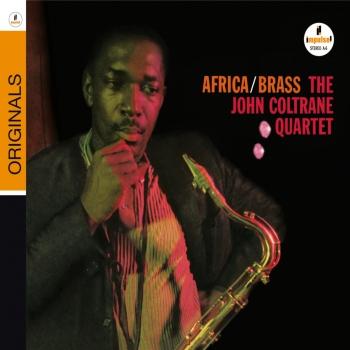
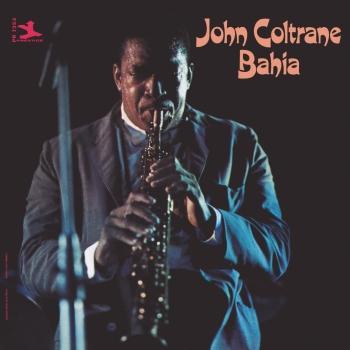
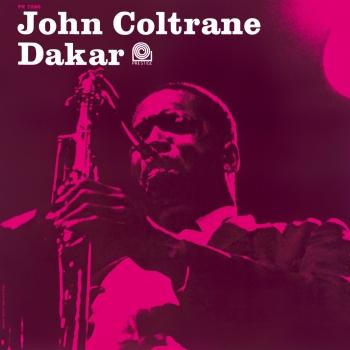
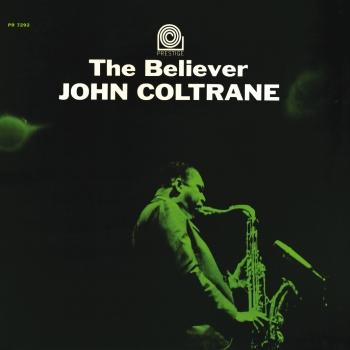
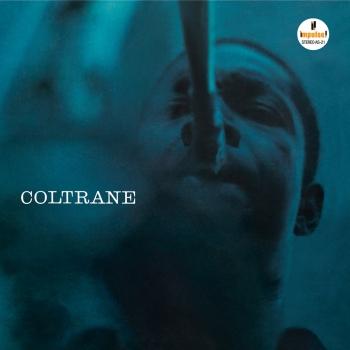
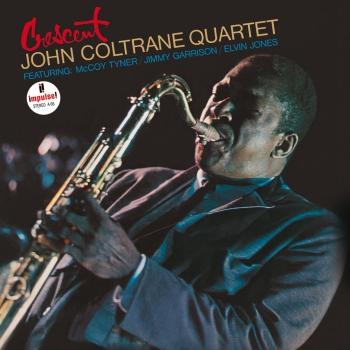
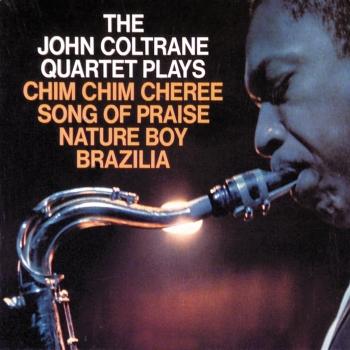
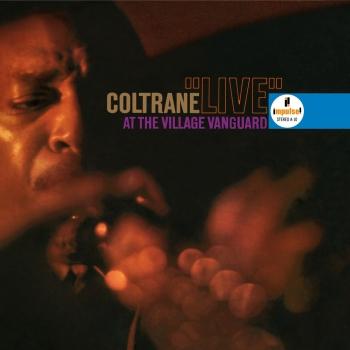
John Coltrane
Born September 23, 1926 in Hamlet, North Carolina, John Coltrane was always surrounded by music. His father played several instruments sparking Coltrane’s study of E-flat horn and clarinet. While in high school, Coltrane’s musical influences shifted to the likes of Lester Young and Johnny Hodges prompting him to switch to alto saxophone. He continued his musical training in Philadelphia at Granoff Studios and the Ornstein School of Music. He was called to military service during WWII, where he performed in the U.S. Navy Band in Hawaii.
After the war, Coltrane began playing tenor saxophone with the Eddie 'CleanHead' Vinson Band, and was later quoted as saying, 'A wider area of listening opened up for me. There were many things that people like Hawk, and Ben and Tab Smith were doing in the ‘40’s that I didn’t understand, but that I felt emotionally.' Prior to joining the Dizzy Gillespie band, Coltrane performed with Jimmy Heath where his passion for experimentation began to take shape. However, it was his work with the Miles Davis Quintet in 1958 that would lead to his own musical evolution. ' Miles music gave me plenty of freedom,' he once said. During that period, he became known for using the three-on-one chord approach, and what has been called the ‘sheets of sound,’ a method of playing multiple notes at one time.
By 1960 Coltrane had formed his own quartet which included pianist McCoy Tyner, drummer Elvin Jones, and bassist Jimmy Garrison. Eventually adding players like Eric Dolphy, and Pharoah Sanders. The John Coltrane Quartet created some of the most innovative and expressive music in Jazz history including the hit albums: 'My Favorite Things,' 'Africa Brass,' ' Impressions,' ' Giant Steps,' and his monumental work 'A Love Supreme' which attests to the power, glory, love, and greatness of God. Coltrane felt we must all make a conscious effort to effect positive change in the world, and that his music was an instrument to create positive thought patterns in the minds of people.
In 1967, liver disease took Coltrane’s life leaving many to wonder what might have been. Yet decades after his departure his music can be heard in motion pictures, on television and radio. Recent film projects that have made references to Coltrane’s artistry in dialogue or musical compositions include, 'Mr. Holland’s Opus', 'The General’s Daughter', 'Malcolm X', 'Mo Better Blues', 'Jerry McGuire', 'White Night', 'The Last Graduation', 'Come Unto Thee', 'Eyes On The Prize II' and 'Four Little Girls'. Also, popular television series such as 'NYPD Blue', 'The Cosby Show', 'Day’s Of Our Lives', 'Crime Stories' and 'ER', have also relied on the beautiful melodies of this distinguished saxophonist.
In 1972, 'A Love Supreme' was certified gold by the RIAA for exceeding 500,000 units in Japan. This jazz classic and the classic album 'My Favorite Things' were certified gold in the United States in 2001.
In 1982, the RIAA posthumously awarded John Coltrane a Grammy Award of ' Best Jazz Solo Performance' for the work on his album, 'Bye Bye Blackbird'. In 1997 he received the organizations highest honor, the Lifetime Achievement Award.
On June 18, 1993 Mrs. Alice Coltrane received an invitation to The White House from former President and Mrs. Clinton, in appreciation of John Coltrane’s historical appearance at the Newport Jazz Festival.
In 1995, John Coltrane was honored by the United States Postal Service with a commemorative postage stamp. Issued as part of the musicians and composers series, this collectors item remains in circulation.
In 1999, Universal Studios and its recording division MCA Records recognized John Coltrane’s influence on cinema by naming a street on the Universal Studios lot in his honor.
In 2001, The NEA and the RIAA released 360 songs of the Century . Among them was John Coltrane’s 'My Favorite Things.' (Source: www.johncoltrane.com)
Dieses Album enthält kein Booklet