




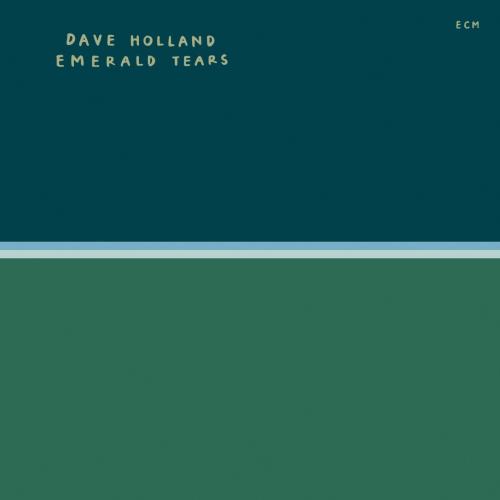
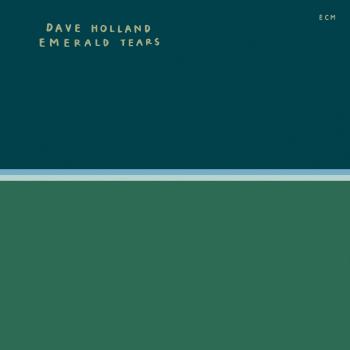
Emerald Tears (Remastered) Dave Holland
Album Info
Album Veröffentlichung:
1978
HRA-Veröffentlichung:
30.01.2026
Das Album enthält Albumcover
Entschuldigen Sie bitte!
Sehr geehrter HIGHRESAUDIO Besucher,
leider kann das Album zurzeit aufgrund von Länder- und Lizenzbeschränkungen nicht gekauft werden oder uns liegt der offizielle Veröffentlichungstermin für Ihr Land noch nicht vor. Wir aktualisieren unsere Veröffentlichungstermine ein- bis zweimal die Woche. Bitte schauen Sie ab und zu mal wieder rein.
Wir empfehlen Ihnen das Album auf Ihre Merkliste zu setzen.
Wir bedanken uns für Ihr Verständnis und Ihre Geduld.
Ihr, HIGHRESAUDIO
- 1 Spheres 05:58
- 2 Emerald Tears 06:31
- 3 Combination 05:18
- 4 B-40 / RS-4-W / M23-6K 05:15
- 5 Under Redwoods 06:38
- 6 Solar 06:17
- 7 Flurries 04:34
- 8 Hooveling 04:04
Info zu Emerald Tears (Remastered)
The upright bass is, of course, a fixture of many jazz ensembles, in which it often “solos” but only over or surrounded by other instruments. Strange, then, that the thought of it on its own should be such a difficult one to swallow (no pun intended). Where most musicians might have fallen back on the comfort of overdubbing and other postproduction trickery, Dave Holland stepped boldly into the limelight (pun intended) with Emerald Tears. Although the album does retain a certain novelty factor by its very concept, even in the hypothetical presence of a tradition of solo bass recordings one imagines it would stand out for its broad palette and ingenuity.
Six of the album’s eight selections bear Holland’s name as composer. “Spheres” and “Under Redwoods” are the two contemplative interlocutors. The former volleys melodic cells between lower thrums and a harmonic pedal point. Quick fingerwork from both hands adapts the instrument to constantly shifting desires for a sound that is fragmented yet immediately relatable. The latter spreads a wider net that is more experiential than autobiographical.
The heavily lilting intro of the title cut declares its state of mind with ceremonial regularity, even as it bends to the whim of improvisation. A flick of the finger gives off a burst of virtuosity. “Combination” is, not surprisingly, a relay between bowing and plucking. This is the outlier of the program and for me doesn’t work quite so well as the rest. Nevertheless, its timbral variety is only heightened by its surroundings. In this vein, and far more effective, are the extended techniques of “Flurries,” which liquefy the strings even further. “Hooveling” is a most characteristic Holland bass line that could easily inaugurate a full-blown quintet piece, but is used instead as a hook into scattered monologues. Of the two non-Holland cuts, the post-bop wings of “B-40/RS-4-W/M23-6K” (Anthony Braxton) give plenty of lift. One might feel tempted to populate the sky around it with clouds shaped like drums, sax, and piano were it not for Holland’s rewarding density. Urgency is regained in “Solar” (Miles Davis), which maps its paths in jagged strokes across an already erratic geography.
Emerald Tears is more than a love song to its instrument. It is a free journey with definite returns, each a touchstone along the way. It takes a few listens to pick out the album’s motives, but they’re surely there, pristine and flowing. I think for the right mood this is a perfect album to put on and let carry you away. Either way, it is a striking and exemplary solo achievement bearing one of jazz’s most distinctive creative signatures. (ecmreviews.com)
"Holland's rich, varnished tone and throbbing percussive sensitivity are compounded with keen intelligence and a brooding streak of romantic melancholy".[5] However, he found, "Alone in the glare of the spotlight, Holland somehow manages to remain in shadow and one is neverquite free of the sensation that this is a Music Minus One album turned inside out". (Larry Birnbaum, DownBeat)
David Holland, double bass
Digitally remastered
Dave Holland
is a bassist, composer, bandleader whose passion for musical expression of all styles, and dedication to creating consistently innovative music ensembles have propelled a professional career of more than 50 years, and earned him top honors in his field including multiple Grammy awards.
Holland stands as a guiding light on acoustic and electric bass, having grown up in an age when musical genres—jazz, rock, funk, avant-garde, folk, electronic music, and others—blended freely together to create new musical pathways. He was a leading member of a generation that helped usher jazz bass playing from its swing and post-bop legacy to the vibrancy and multidiscipline excitement of the modern era, extending the instrument’s melodic, expressive capabilities. Holland’s virtuosic technique and rhythmic feel, informed by an open-eared respect of a formidable spread of styles and sounds, is widely revered and remains much in demand. To date, His playing can be heard on hundreds of recordings, with more than thirty as a leader under his own name.
As a leader and collaborator, Holland continues to tour the world and it comes as no surprise that he has and still serves the music in an educational role, having worked during the 1980s as artistic director of the Banff Centre’s jazz summer program (Canada), and as a faculty member for two years at the New England Conservatory of Music in the ‘90s, where he still serves as an artist in residence (as he does at the Royal Academy of Music.) He has also been elected a Fellow of the Guildhall School—his alma mater—and has received honorary doctorates from Birmingham Conservatoire (UK), Berklee College of Music, and the New England Conservatory.
Most recently, Holland was made an Honorary Member of the Royal Academy of Music (UK)—a rare honor as membership is limited to 300 living musicians—and he’s been named a 2017 Jazz Master by the National Endowment for the Arts.
Over the years and through countless musical experiences, Holland has come to define his purpose as a musician—and he articulates it well: “I’m trying to create music that exists on multiple levels, such as simpler elements along with more complex elements. To me, a lot of great art, whether it’s visual, musical or written, has an ability to do those things—to offer some fundamental truths that echo in people, yet at the same time, introduce them to a new way of looking at those fundamentals that gives them a little different perspective…
Dieses Album enthält kein Booklet