


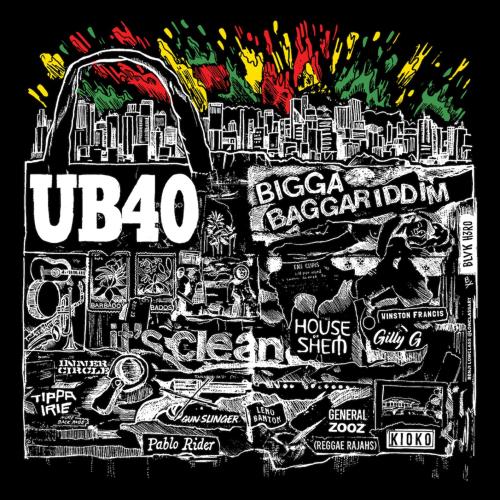
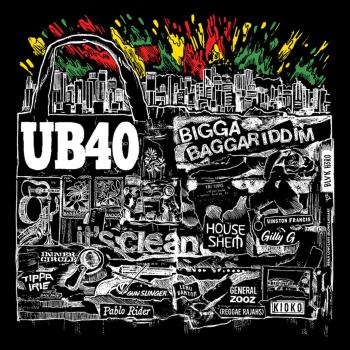
Bigga Baggariddim UB40
Album Info
Album Veröffentlichung:
2021
HRA-Veröffentlichung:
16.07.2026
Das Album enthält Albumcover
- 1 Good Vibes Tonight 03:25
- 2 On The Road 03:24
- 3 Gravy Train Is Coming 04:41
- 4 Rebel Love 03:56
- 5 Did You See That? 04:37
- 6 You Don't Call Anymore 03:43
- 7 Me Nah Leave Yet 03:52
- 8 Love You Now 03:28
- 9 Mi Life Action 03:03
- 10 My Best Friend's Girlfriend 03:03
- 11 Message Of Love 03:08
- 12 I'm Alright 04:05
- 13 Show And Prove 03:17
- 14 Whatever Happened To The Have Nots? 03:27
- 15 Roots Rock Reggae 04:18
Info zu Bigga Baggariddim
Wenn eine Band einen solchen Bekanntheitsgrad erreicht hat wie die englische Band UB40, kann sie genau das Album machen, das sie will. UB40, auf die sich die Jam-Meister Phish beziehen und die immer noch als Pointe für Vaterwitze herhalten, blickt mittlerweile auf mehr als 40 Jahre Bandgeschichte zurück. Beflügelt von großen Hits in den 1980er- und 1990er-Jahren hält die Band mit „Bigga Baggariddim“, ihrem 21. Album, das Reggae-Feuer am Brennen.
Der Albumtitel bezieht sich auf das Album der Band aus dem Jahr 1985, auf dem sie ihre früheren Songs mit Hilfe namhafter Gastmusiker neu interpretierte. „Bigga Baggariddim“ folgt diesem Format, indem auf jedem Song Rapper, MCs oder ganze Reggae-Bands in Zusammenarbeit mit UB40 zu hören sind. Die Songs erscheinen in mehreren Versionen, sodass die 11 beteiligten Künstler ihre eigene Note einbringen können.
Nun fragt ihr euch vielleicht: „Von welcher Version von UB40 ist hier eigentlich die Rede?“ Zur Klarstellung: Bei dieser UB40 handelt es sich um die rechtlich anerkannte Formation, die sich das Recht auf die Nutzung des Namens gesichert hat. Im Jahr 2008 verließen die langjährigen Bandmitglieder Ali Campbell und Micky Virtue die Band, 2013 folgte Sänger Astro. Die drei schlossen sich zu ihrer eigenen UB40-Formation zusammen und änderten ihren Namen bald darauf in UB40 Reunited.
„Bigga Baggariddim“ etabliert sich schnell als roots-orientiertes Album. Die ersten drei Titel bilden eine elfminütige Suite rund um eine bekannte Reggae-Akkordfolge. Die Band verspricht, dass Reggae-Klassiker wie „Good Vibes“ und ein „Gravy Train“ auf dem Weg sind. Die drei Songs stellen im Wesentlichen drei Interpretationen dar, die durch drei verschiedene Kooperationen entstanden sind. Die subtilen Feinheiten von Song zu Song unterstützen einen entspannten, anhaltenden Groove.
„Did You See That“ wird dank Pablo Riders rauer Stimme und einem hypnotischen Dub-Sway etwas skankiger. Der Song ist so ziemlich das „Dreckigste“, was die sonst so braven UB40 zu bieten haben, und profitiert stark von Riders authentischem, rauem Flow. Auch das schlanke Arrangement überzeugt und versetzt die Zuhörer in die verrauchten Dub-Keller von Künstlern wie Linval Thompson.
Stark gesangsorientiert nähern sich UB40 zeitweise Boyband-artigen Verzierungen an. „Rebel Love“ und das Trio von Songs, das mit „You Don’t Call Anymore“ beginnt, lassen sich ein wenig von Gefühl und Süße mitreißen. Letzteres profitiert jedoch von einer starken rhythmischen Grundstruktur, wobei Bass und Bläser den Jam zusammenhalten. Der „Rag-and-Bone“-Shuffle setzt sich bei „Me Nah Leave Yet“ und „Love You Now“ fort, jeweils zugunsten des Gast-MCs Gilly G und der neuseeländischen Reggae-Band House Of Shem. Dennoch bewegen sich die drei Versionen größtenteils auf dem gleichen Terrain.
Hinter der scheinbaren Einfachheit verbergen sich subtile und gezielte musikalische Entscheidungen. Im Wesentlichen gibt es nur acht Themen, von denen vier in mehreren Versionen vorkommen. Das bietet den Gästen zwar eine Plattform, verschiedene Richtungen zu erkunden, doch denselben Song dreimal hintereinander zu hören, wird mit der Zeit ermüdend. Und mit einer Spieldauer von 55 Minuten verlangt „Bigga Baggariddim“ einen erheblichen Zeitaufwand, um Variationen herauszuhören, die letztlich kaum ins Gewicht fallen.
UB40

UB40
The story of UB40, and how this group of young friends from Birmingham transcended their working-class origins to become the world’s most successful reggae band is not the stuff of fairytales as might be imagined. The group’s led a charmed life in many respects it’s true, but it’s been a long haul since the days they’d meet up in the bars and clubs around Moseley, and some of them had to scrape by on less than £8 a week unemployment benefit. The choice was simple if you’d left school early. You could either work in one of the local factories, like Robin Campbell did, or scuffle along aimlessly whilst waiting for something else to happen.
By the summer of 1978, something else did happen, and the nucleus of UB40 began rehearsing in a local basement. Robin’s younger brother Ali, Earl Falconer, Brian Travers and James Brown all knew each other from Moseley School of Art, whilst Norman Hassan had been a friend of Ali’s since school. Initially, they thought of themselves as a "jazz-dub-reggae" band, but by the time Robin was persuaded to join and they’d recruited Michael Virtue and Astro – who’d learnt his craft with Birmingham sound-system Duke Alloy – the group had already aligned themselves to left-wing political ideals and forged their own identity, separate from the many punk and Two Tone outfits around at that time. The group had nailed their colours to the mast by naming themselves after an unemployment benefit form. Their political convictions hadn’t been gleaned second hand either, but cemented in place whilst attending marches protesting against the National Front, or rallies organised by Rock Against Racism.
By the time Chrissie Hynde invited them to tour with the Pretenders during the summer of 1980 and their debut single "King b/w Food For Thought" had sailed into the UK Top 5, all the essential elements of UB40 were already in place. Their line-up will remain unchanged for almost thirty years, and they will continue playing a mix of original material and inspired choice of reggae covers in a style that’s instantly accessible with its bright melodies and sweeping horn arrangements – one that’s allied to a formidable rhythm section, capable of holding its own with anything from Jamaica.
UB40’s first album was released the following September, on Graduate Records. Their deal allowed them more creative freedom than if they had signed with a major label. The cover artwork memorably duplicated an unemployment benefit card, with the title "Signing Off" rubber-stamped in red, but it was the music that quickly worked its way into the affections of a young, mainly student crowd with its knowing lyrics, solid reggae rhythms and dubby, instrumental passages, offset by warm horn solos and Jamaican style scatting. There was nothing else like it at the time. As a multi-cultural band from Birmingham, UB40 weren’t drawn into trying to sound "authentic," and there was considerably more depth to their music than that of many punk and 2Tone bands. "I’m a British subject, not proud of it, whilst I carry the burden of shame," they sang on one of the tracks. Accepting the truth of their own situation amidst a sea of other reggae songs proclaiming black heritage gave us a valuable insight into where UB40 were coming from. They were unafraid to stand up and be counted, and British audiences instinctively loved them for it. "Signing Off" duly went to No. 2 in the UK and stayed on the nation’s album charts for 72 weeks.
At the end of 1980, the contract with Graduate expired and UB40 formed their own record company, DEP International, with all eight members owning an equal share. They also signed a licensing deal with CBS, which ensured them far better distribution. "Signing Off" was still in the charts when they released their second album "Present Arms" in the summer of 1981. The sound was immediately brighter, harder and more professional, yet the spirit and commitment underpinning the band’s songs remained resolutely unchanged, as heard on "One In Ten," written about the UK’s record number of unemployed. With lyrics like "Nobody knows me, but I’m always there. A statistical reminder of a world that doesn’t care," "One In Ten" became an anthem of the British protest movement, and a genuine counterpart to the equally motivated songs being written by the likes of Bob Marley and Peter Tosh in the Caribbean. "One In Ten" will earn the rare distinction of being "versioned" by Jamaican reggae acts in future. Back in 1981, it formed part of the soundtrack accompanying the race riots erupting in places like Brixton, Handsworth and St. Paul’s in Bristol – hard pressed, inner city areas with large immigrant communities that had found themselves on the frontline in resisting the right wing policies of Margaret Thatcher’s government. More information, please visit: www.ub40.co.uk
Dieses Album enthält kein Booklet