



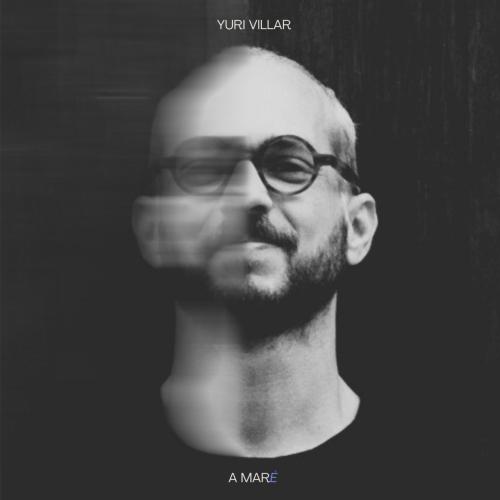
A Maré Yuri Villar
Album info
Album-Release:
2026
HRA-Release:
13.10.2026
Album including Album cover
- 1 Me Procurar 03:40
- 2 A Maré 04:59
- 3 De repente ''Blue'' 04:14
- 4 Maria 04:26
- 5 Renascimento 05:00
- 6 Outer World 06:16
- 7 O Sorriso do Chico 05:58
- 8 Nina 02:44
- 9 Casa 04:14
Info for A Maré
The album “A Maré” features eight instrumental tracks and one song, reflecting the highs and lows in the life of composer, saxophonist, and music producer Yuri Villar over the past three years. Coming out of a ten-year marriage with a young child, strong emotional waves shaped much of the inspiration behind the compositions. These experiences led Yuri to write most of the material on the album.
Just like the tide, which rises and falls, these emotions are translated into music through tension and release—not only within each piece, but also across the album as a whole. At times, the music is introspective, tense, and melancholic; at others, joyful, playful, and hopeful. In this sense, the record moves through emotional “highs and lows,” guiding the listener through a deeply personal story that, while rooted in individual experience, carries a universal quality shared by all human beings.
Beyond the reference to ocean tides (maré), Yuri also plays with the Portuguese phrase “Amar é” (“to love is”), which for the listener becomes clear as “making music.” He is deeply committed to creating music that comes from the heart—shaped by feelings, encounters (and misencounters), and real people making art together. In times of music increasingly generated through AI prompts, the producer emphasizes that music must remain alive, with soul, active interpretation, and genuine emotional investment in order to truly connect with the listener.
Melody is the guiding force of the album/boat, and a defining characteristic across all compositions, which are primarily instrumental. The main influences include Egberto Gismonti, Hermeto Pascoal, and Clube da Esquina, while traces of rock, psychedelia, and 1970s funk are strongly present in the saxophonist’s sound. Yuri has previously worked with major figures in Brazilian music such as Hermeto Pascoal, Carlos Malta, Wagner Tiso, Geraldo Azevedo, Mário Adnet, and Teresa Cristina, among others.
The eight instrumental tracks do not follow a single defined genre and feature diverse instrumentation. About one third of the album is presented with acoustic guitars and electric guitars, without a rhythmic section. The rest follows a more classical quartet formation, with drums, electric bass, and piano, featuring guest musicians André Dantas and André Siqueira (guitars), Joana Queiroz (bass clarinet), Maju Nunes (voice), Laura de Castro (voice), Jonas Hocherman (trombone), Pedro Paulo Jr. (trumpet), and Rodrigo Pacato (percussion). Yuri, a multi-instrumentalist, leads the ensemble performing the entire saxophone family, as well as transverse flute, piano, percussion, acoustic guitar, and synthesizers.
The only song on the album, “Renascimento” (“Rebirth”), is also its only collaboration with lyrics by Daniel Basílio. It portrays a turning point—a kind of rebirth—for the composer, facing the challenges of separation and reconciling with himself. The song is performed by singer and multidisciplinary artist Laura de Castro, who delivers an emotional interpretation.
Yuri Villar, saxophones, flutes, piano, percussion, acoustic guitar, and synthesizers
André Dantas, guitars
André Siqueira, guitars
Joana Queiroz, bass clarinet
Maju Nunes, vocals
Laura de Castro, vocals
Jonas Hocherman, trombone
Pedro Paulo Jr., trumpet
Rodrigo Pacato, percussion
Yuri Villar
I began my musical journey at age eight, playing the violin using the Suzuki method, and continued until I was twelve. Afterward, I studied piano briefly before encountering the saxophone at age fifteen. I started my studies with *choro* musician Mario Pereira, and a year later, I began lessons with the renowned French-Brazilian saxophonist Idriss Boudrioua. In 2002, I entered the Federal University of Rio de Janeiro (UFRJ), where I studied under Professor and conductor José Rua, as well as professors Fernando Trocado, Marco Tulio, and Julio Merlino.
During this time, I was a member of the UFRJazz Ensemble—the university's jazz big band—and recorded the album *Paisagens do Rio*, featuring compositions and guest appearances by Guinga, Carlos Malta, Jovino Santos, Francis Hime, and Gilson Peranzeta, among others.
While attending university, I also joined the Itiberê Orquestra Família, led by the great bassist Itiberê Zwarg (of Hermeto Pascoal's group). I performed with the orchestra for seven years, recording the albums *Calendário do Som* (2005) and *Contrastes* (2009) and touring across Brazil, Argentina, and Uruguay.
Since 2006, I have been a member of Grupo Água Viva, a Brazilian popular music ensemble. The group won the 2007 Tápias Award for Integrated Arts and toured festivals throughout Latin America. In 2011, the group released its debut album, *Mundo ao Revés*, featuring a guest appearance by Bibi Ferreira on one of the tracks. The album was ranked among the top 100 of 2011 by the specialized website *Embrulhador*. In 2012, the group won the MEC and Nacional Radio Award for Best Instrumental Performance and Arrangement. In 2016, we released our second album, *O Louco*.
In 2007, I joined the Brazilian instrumental group Bondesom, with whom I recorded the albums *Bondesom* (2008), *Procurando Lola* (2012), *Três* (2014), and *Pista Livre* (2021). The group has performed over 300 times and participated in major festivals such as Viradão Cultural, Conexão Rio, the Leblon Jazz Festival, and Copafest.
In 2012, I formed the wind sextet Inventos with former orchestra colleagues; we released a self-titled album funded by the state government's music support fund (FAM). We are currently working on the *Inventos_Livre* project, combining the wind section with two drum kits.
In 2016, I formed "Relógio de Dalí," a quartet that proposes a more contemporary aesthetic for instrumental music, exploring new approaches to form and improvisation. The group released an EP in 2017 and performed at major festivals such as MIMO, the Villa-Lobos Festival, and FIL. A new album is currently being finalized.
In 2011, I became associated with Estúdio DoBeco and deepened my knowledge of audio recording and editing techniques. Since then, I have composed various soundtracks for TV and film; the most notable is the score for the feature film *Sudoeste* by director Eduardo Nunes, which won the Special Jury Prize at the 2011 Rio Festival, among other international awards. In addition to all these projects, I also found time to collaborate with, write arrangements for, and record alongside various artists—such as Tereza Cristina, Antonia Adnet, Vinicius Castro, Luiza Sales, Mario Adnet, Roberta Sá, and Geraldo Azevedo, among others.
Oh, and I was also a regular in musical theater! I played in productions such as *Fé na Parada* (by Ernesto Piccolo); *O Grande Circo Místico* (by Chico Buarque and Edu Lobo, directed by João Fonseca); *Amargo Fruto: A Vida de Billie Holiday* (by Ticiana Studart and Jau Sant’Angelo); *Simbora: A História de Wilson Simonal* (by Nelson Motta and Patricia Andrade); *A Cuíca do Laurindo* (by Rodrigo Alzuguir); and *A Gota D’Água [A Seco]* (by Chico Buarque and Paulo Pontes, directed by Rafael Gomez).
In 2019, I released my debut solo album, *Futuro Agora*—a retrospective of my musical journey inspired by the birth of my first son, Matias. In 2020, I released three original singles and two audiovisual projects: “Onde mora o som” (Where Sound Lives)—duets with renowned musicians filmed in single continuous takes by Marcelo Fedrá—and “#Stents,” a series of video-musical interventions created in response to other musicians' Instagram posts.
In 2021, I released two songs: “Passageiro,” in collaboration with Jade Prata, and “Todo Céu,” with Pedro Mann. I also recorded two original instrumental EPs—one with a full band and another featuring piano duets with female instrumentalists. Both are set for release in 2022.
In March 2022, I released “Samba Maltês,” a tribute to saxophonist Carlos Malta that features him on soprano sax. In July, I released “Baiãozinho” with violinist Carol Panesi.
The next steps involve releasing the new albums and three additional original instrumental singles.
This album contains no booklet.