

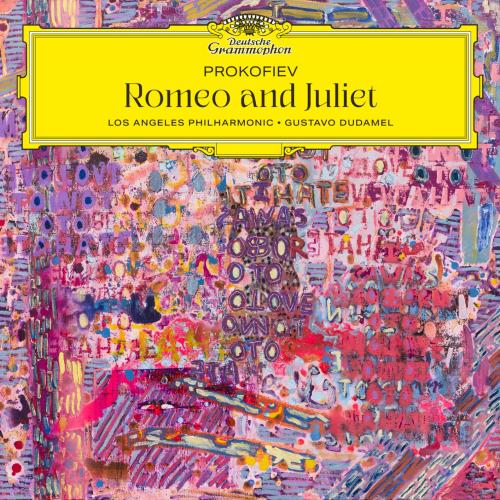
Prokofiev: Romeo and Juliet, Op. 64 Los Angeles Philharmonic & Gustavo Dudamel
Album info
Album-Release:
2026
HRA-Release:
13.02.2026
Label: Deutsche Grammophon (DG)
Genre: Classical
Subgenre: Orchestral
Artist: Los Angeles Philharmonic & Gustavo Dudamel
Composer: Sergej Prokofiev (1891-1953)
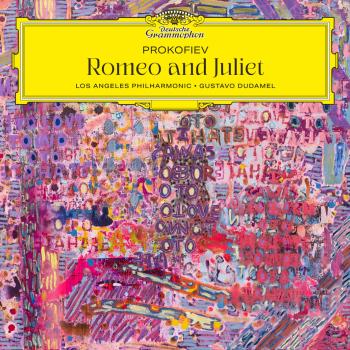
Album including Album cover
I`m sorry!
Dear HIGHRESAUDIO Visitor,
due to territorial constraints and also different releases dates in each country you currently can`t purchase this album. We are updating our release dates twice a week. So, please feel free to check from time-to-time, if the album is available for your country.
We suggest, that you bookmark the album and use our Short List function.
Thank you for your understanding and patience.
Yours sincerely, HIGHRESAUDIO
- Sergei Prokofiev (1891 - 1953): Romeo and Juliet, Op. 64, Act I:
- 1 Prokofiev: Romeo and Juliet, Op. 64, Act I: No. 1, Introduction 02:32
- 2 Prokofiev: Romeo and Juliet, Op. 64, Act I: No. 2, Romeo 01:24
- 3 Prokofiev: Romeo and Juliet, Op. 64, Act I: No. 3, The Street Awakens 01:26
- 4 Prokofiev: Romeo and Juliet, Op. 64, Act I: No. 4, Morning Dance 02:09
- 5 Prokofiev: Romeo and Juliet, Op. 64, Act I: No. 5, The Quarrel 01:39
- 6 Prokofiev: Romeo and Juliet, Op. 64, Act I: No. 6, The Fight 02:33
- 7 Prokofiev: Romeo and Juliet, Op. 64, Act I: No. 7, The Duke's Command 01:20
- 8 Prokofiev: Romeo and Juliet, Op. 64, Act I: No. 8, Interlude 01:53
- 9 Prokofiev: Romeo and Juliet, Op. 64, Act I: No. 9, At the Capulets' (Preparations for the Ball) 01:18
- 10 Prokofiev: Romeo and Juliet, Op. 64, Act I: No. 10, The Young Juliet 03:20
- 11 Prokofiev: Romeo and Juliet, Op. 64, Act I: No. 11, Arrival of the Guests (Minuet) 03:36
- 12 Prokofiev: Romeo and Juliet, Op. 64, Act I: No. 12, Masks 02:40
- 13 Prokofiev: Romeo and Juliet, Op. 64, Act I: No. 13, Dance of the Knights 05:04
- 14 Prokofiev: Romeo and Juliet, Op. 64, Act I: No. 14, Juliet's Variation 02:29
- 15 Prokofiev: Romeo and Juliet, Op. 64, Act I: No. 15, Mercutio 02:11
- 16 Prokofiev: Romeo and Juliet, Op. 64, Act I: No. 16, Madrigal 03:23
- 17 Prokofiev: Romeo and Juliet, Op. 64, Act I: No. 17, Tybalt Recognizes Romeo 01:56
- 18 Prokofiev: Romeo and Juliet, Op. 64, Act I: No. 18, Gavotte. Departure of the Guests 03:23
- 19 Prokofiev: Romeo and Juliet, Op. 64, Act I: No. 19, Balcony Scene 03:12
- 20 Prokofiev: Romeo and Juliet, Op. 64, Act I: No. 20, Romeo's Variation 01:11
- 21 Prokofiev: Romeo and Juliet, Op. 64, Act I: No. 21, Love Dance 05:29
- Romeo and Juliet, Op. 64, Act II:
- 22 Prokofiev: Romeo and Juliet, Op. 64, Act II: No. 22, Folk Dance 03:26
- 23 Prokofiev: Romeo and Juliet, Op. 64, Act II: No. 23, Romeo and Mercutio 02:13
- 24 Prokofiev: Romeo and Juliet, Op. 64, Act II: No. 24, Dance of the Five Couples 03:24
- 25 Prokofiev: Romeo and Juliet, Op. 64, Act II: No. 25, Dance with Mandolins 02:23
- 26 Prokofiev: Romeo and Juliet, Op. 64, Act II: No. 26, Nurse 01:53
- 27 Prokofiev: Romeo and Juliet, Op. 64, Act II: No. 27, The Nurse and Romeo 00:52
- 28 Prokofiev: Romeo and Juliet, Op. 64, Act II: No. 28, Romeo at Friar Laurence's 02:46
- 29 Prokofiev: Romeo and Juliet, Op. 64, Act II: No. 29, Juliet at Friar Laurence's 03:15
- 30 Prokofiev: Romeo and Juliet, Op. 64, Act II: No. 30, Public Merrymaking 03:19
- 31 Prokofiev: Romeo and Juliet, Op. 64, Act II: No. 31, Further Public Festivities 02:21
- 32 Prokofiev: Romeo and Juliet, Op. 64, Act II: No. 32, Meeting of Tybalt and Mercutio 01:50
- 33 Prokofiev: Romeo and Juliet, Op. 64, Act II: No. 33, The Duel 01:20
- 34 Prokofiev: Romeo and Juliet, Op. 64, Act II: No. 34, Death of Mercutio 02:36
- 35 Prokofiev: Romeo and Juliet, Op. 64, Act II: No. 35, Romeo Decides to Avenge Mercutio 02:00
- 36 Prokofiev: Romeo and Juliet, Op. 64, Act II: No. 36, Finale 02:08
- Romeo and Juliet, Op. 64, Act III:
- 37 Prokofiev: Romeo and Juliet, Op. 64, Act III: No. 37, Introduction 01:19
- 38 Prokofiev: Romeo and Juliet, Op. 64, Act III: No. 38, Romeo and Juliet (Juliet's Bedroom) 01:42
- 39 Prokofiev: Romeo and Juliet, Op. 64, Act III: No. 39, Romeo Bids Juliet Farewell 05:33
- 40 Prokofiev: Romeo and Juliet, Op. 64, Act III: No. 40, Nurse 01:49
- 41 Prokofiev: Romeo and Juliet, Op. 64, Act III: No. 41, Juliet Refuses to Marry Paris 02:34
- 42 Prokofiev: Romeo and Juliet, Op. 64, Act III: No. 42, Juliet Alone. Adagio 01:24
- 43 Prokofiev: Romeo and Juliet, Op. 64, Act III: No. 43, Interlude. Adagio 01:28
- 44 Prokofiev: Romeo and Juliet, Op. 64, Act III: No. 44, At Friar Laurence's Cell 05:02
- 45 Prokofiev: Romeo and Juliet, Op. 64, Act III: No. 45, Interlude. L'istesso tempo 01:37
- 46 Prokofiev: Romeo and Juliet, Op. 64, Act III: No. 46, Juliet's Room 02:51
- 47 Prokofiev: Romeo and Juliet, Op. 64, Act III: No. 47, Juliet Alone. Andante 04:18
- 48 Prokofiev: Romeo and Juliet, Op. 64, Act III: No. 48, Aubade (Morning Serenade) 02:19
- 49 Prokofiev: Romeo and Juliet, Op. 64, Act III: No. 49, Dance of the Girls with Lilies 01:59
- 50 Prokofiev: Romeo and Juliet, Op. 64, Act III: No. 50, At Juliet's Bedside 02:03
- 51 Prokofiev: Romeo and Juliet, Op. 64, Act IV: No. 51, Juliet's Funeral 06:02
- Romeo and Juliet, Op. 64, Act IV:
- 52 Prokofiev: Romeo and Juliet, Op. 64, Act IV: No. 52, Death of Juliet 03:38
Info for Prokofiev: Romeo and Juliet, Op. 64
As the LA Phil celebrates Gustavo Dudamel’s 17-year tenure as Music & Artistic Director, Deutsche Grammophon is proud to announce the release of two recordings, presenting two of Sergei Prokofiev’s most popular works that highlight the Russian composer’s enormous gift for colourful storytelling. The first features a scintillating performance of the complete orchestral music from the bold and evocative score for the ballet Romeo and Juliet. The second offers a magical and dramatic account of the classic tale of Peter and the Wolf, brilliantly narrated by EGOT‑winning actress and producer Viola Davis (Fences, The Woman King, G20).
Romeo and Juliet comes out digitally on 13 February 2026, and Peter and the Wolf will follow – digitally on 22 May. The cover designs have been commissioned from acclaimed LA‑ and Berlin-based visual artist Alexandra Grant, known for her translations of words and narrative into media such as painting, sculpture, film and photography.
Venezuelan conductor Gustavo Dudamel took up his post with the LA Phil in 2009. Since then, he and the orchestra have worked tirelessly together to bring music to an ever-wider audience, through performances at home in LA, across the US and around the world; cutting-edge commissions; award-winning recordings; and dedicated engagement with their local community. At the end of the 2025-26 season Dudamel becomes Music and Artistic Director of the New York Philharmonic. Before then, the LA Phil is thanking him for the passion, humanity and vision he has brought to his time with the orchestra in a season christened “Celebrating Gustavo”.
“Together,” says Dudamel himself, “we have reimagined what an orchestra can be, and how it can serve both the community around it and the world at large. In these remarkable players, I have found both a profound wellspring of generosity and a visionary commitment to excellence in music-making.”
After moving back to the Soviet Union in 1933, following a self-imposed exile of 15 years, Sergei Prokofiev suddenly found
a new sense of purpose as a composer. Hailed as a returning hero, honored by the government and the press, he began to dedicate himself to propagating the ideals of the Bolshevik revolution, both through overtly propagandistic potboilers such as the electrifying Cantata for the 20th Anniversary of the October Revolu- tion, and a conscious effort to draw back from the angry, acerbic dissonance that had made his name in the West. Appro- priately enough, his first great success came not in the concert hall but in the far more proletarian arena of the movie house: the score for a satirical film called The Tsar Wants to Sleep, which would soon become world-famous as the popular Lieutenant Kijé Suite.
Over the next several years, the desire to write music that could be shared with the widest possible audience resulted in some of the most approachable and universally appealing of all his scores: that deceptively simple drama for children, Peter and Wolf, the music for Sergei Eisenstein’s film Alexander Nevsky, and what is widely regarded as the greatest full-length ballet of the 20th century, Romeo and Juliet.
Composed in a burst of frenzied activity during the summer of 1935, Romeo and Juliet proved to be controversial even before a note of the music was heard in public. Working with the director S. E. Radlov, Prokofiev devised a scenario in which the story was given a happy ending. “In the last act, Romeo arrives a minute earlier and finds Juliet alive and everything ends well,” the composer recalled in his Autobiography. “The reasons for this bit of barbarism were purely choreographic: living people can dance, the dying cannot.” While there were ample historical precedents for this sort of vandalism — Victorian productions of King Lear routinely ended happily, and in one version of Ambroise Thomas’ opera Hamlet, the melancholy Dane survives and marries Ophelia — Prokofiev was persuaded by the choreographers “that the tragic ending could be expressed in the dance and in due time the music for that ending was written.”
After the directors of the Bolshoi Ballet in Moscow read through the score and pronounced it “impossible to dance to,” Prokofiev, in a cold rage, extracted two suites from the ballet in 1936. Guessing — correctly — that the suites would create a demand to hear the work in its entirety, Prokofiev soon had the pleasure of seeing the Bolshoi and its bitter rival, the Kirov Ballet of Leningrad, vie for the right of the first production. The honor of the first Soviet performance fell to the Kirov on January 11, 1940, some two years after Romeo and Juliet was given its world premiere in Brno, Czechoslovakia, in December of 1938.
In spite of its considerable length — at nearly two and a half hours, it is the most ambitious of Prokofiev’s non-operatic scores — Romeo and Juliet is unusually concentrated. Moreover, like Tchaikovsky’s “symphonic” ballets, Swan Lake and The Sleeping Beauty, it is a carefully molded musical and emotional structure in which the music is not only intimately related to the stage action, but is also a self-referential dramatic construct which can readily stand on its own. — Jim Svejda
“[Gustavo Dudamel] seems to perform an otherworldly mind-meld with LA Phil musicians, delivering nothing short of astonishment” (Forbes, 30 September 2025)
Viola Davis, narrator
Los Angeles Philharmonic
Gustavo Dudamel, artistic director
Gustavo Dudamel
is driven by the belief that music has the power to transform lives, to inspire, and to change the world. Through his dynamic presence on the podium and his tireless advocacy for arts education, Dudamel has introduced classical music to new audiences around the globe and has helped to provide access to the arts for countless people in underserved communities. He currently serves as the Music & Artistic Director of the Los Angeles Philharmonic, and Music Director of the Opéra National de Paris and Simón Bolívar Symphony Orchestra.
Dudamel’s bold programming and expansive vision led The New York Times to herald the LA Phil as “the most important orchestra in America – period.” In the 2022/23 season, Dudamel and the LA Phil celebrate the 90th birthday of legendary film composer John Williams with a Gala event, while their visionary, multi-year Pan-American Music Initiative, continues to celebrate the explosive creativity of the Americas. Further highlights with the LA Phil include a Fall tour with performances at Carnegie Hall, Boston, Mexico City, and Guanajuato, a ten-day exploration of the piano/orchestral works of Rachmaninoff with Yuja Wang, and a concert presentation of Wagner’s Tristan und Isolde. In Spring 2023, Dudamel makes return appearances to lead programs with the Berliner Philharmoniker and New York Philharmonic.
Highlights of the 100th anniversary season of the Hollywood Bowl in 2022 include Dudamel leading the LA Phil in a collaborative program featuring dancers from the Paris Opera Ballet, two presentations of West Side Story (2021) in Concert, global superstar Ricky Martin joining Dudamel and the LA Phil over two nights for his debut Hollywood Bowl performances, the world premiere of Venezuelan composer Gonzalo Grau’s Cuatro Concerto, and semi-staged performances of Act III of Wagner’s Die Walküre and Orff’s Carmina Burana. The Dudamel Foundation will also bring its “Encuentros” initiative to the Hollywood Bowl as part of the 100th anniversary season, in a two-week intensive global leadership and orchestral training program for young musicians from around the world, culminating in a concert at the Bowl and a tour with the “Orquestra del Encuentros” to Santa Barbara and the legendary Greek Theatre in Berkeley, California.
Following his inaugural season as Music Director of the Paris Opera, the 2022/23 season features Dudamel leading productions of Puccini’s Tosca, Wagner’s Tristan und Isolde, a new production of John Adams’ Nixon in China, directed by Valentina Carrasco, and Thomas Adès’ Dante project, choreographed by Wayne McGregor. Dudamel has led over 30 staged, semi-staged, and concert productions across the world’s major stages, including five productions with Teatro alla Scala, productions at the Berlin and Vienna State Operas, the Metropolitan Opera in New York and 13 operas in Los Angeles, with repertoire ranging from Così fan tutte to Carmen, from Otello to Tannhäuser, from West Side Story to contemporary operas by composers like John Adams and Oliver Knussen.
Over the course of the COVID-19 global pandemic, Dudamel has committed even more time and energy to his mission of bringing music to people across the globe, firm in his conviction that the arts play an essential role in creating a more just, peaceful, and integrated society. A landmark event was the highly anticipated launch of Symphony, a state-of-the-art immersive VR film experience designed as both a permanent exhibition in Barcelona and a touring exhibition in two mobile pop-up cinemas that will travel to hundreds of towns across Spain and Portugal, allowing tens of thousands of people to have access to the power of symphonic music. The LA Phil also released its groundbreaking Sound/Stage digital media initiative, featuring artists like Billie Eilish, Father John Misty, Gabriela Ortiz, John Williams, Jessie Montgomery, and more.
Dudamel’s advocacy for the power of music to unite, heal, and inspire is global in scope. Inspired by his transformative experience as a youth in Venezuela’s immersive musical training program El Sistema, Dudamel, the LA Phil, and its community partners founded YOLA (Youth Orchestra Los Angeles) in 2007, now providing 1,500 young people with free instruments, intensive music instruction, academic support and leadership training. In October 2021, YOLA opened its first permanent, purpose-built facility: The Judith and Thomas L. Beckmen YOLA Center at Inglewood, designed by architect Frank Gehry. Dudamel also created The Dudamel Foundation in 2012, which he co-chairs with his wife, actress and director María Valverde, with the goal “to expand access to music and the arts for young people by providing tools and opportunities to shape their creative futures.” In 2017, he formed the “Orchestra of the Future,” made up of young people representing five continents and over a dozen countries, around the Nobel Prize Concert in Sweden, where he also delivered a lecture on the unity of the arts and sciences. His 2018 “Americas” tour with the Vienna Philharmonic marked his first Encuentros program in Mexico City, which celebrated the symbolic union of a “United Americas,” a bridge he further strengthened with an LA Phil residency there in 2019. In 2021, The Dudamel Foundation presented its first European Encuentros in Spain as a way to explore cultural unity and celebrate harmony, equality, dignity, beauty, and respect through music. In April 2022, Dudamel conducted the LA Phil and a star-studded cast in a new production of Beethoven’s only opera, Fidelio, produced in collaboration with Los Angeles’s Tony Award®-winning Deaf West Theatre, Deaf performers of El Sistema Venezuela’s Coro de Manos Blancas (White Hands Choir), and The Dudamel Foundation.
One of the few classical musicians to become a bona fide pop culture phenomenon, Dudamel conducted the score to Steven Spielberg’s new adaptation of Bernstein’s West Side Story and starred as the subject of a documentary on his life, ¡Viva Maestro!, which was released by Participant Media. He voiced the character of Trollzart in the DreamWorks animated feature Trolls World Tour and appeared in Amazon Studio’s award-winning comedy series Mozart in the Jungle, Sesame Street, The Simpsons, and Disney’s The Nutcracker and the Four Realms, for which he also recorded the score. At John Williams’ personal request, he guest conducted the opening and closing credits of Star Wars: The Force Awakens and performed with the LA Phil at the 2019 Academy Awards®. In summer 2021, Dudamel performed with pop icon Christina Aguilera at the Hollywood Bowl in her first-ever full performance with orchestra and also led the LA Phil alongside international superstar Billie Eilish and FINNEAS as part of the concert film experience Happier Than Ever: A Love Letter to Los Angeles, which premiered in September 2021 on Disney+. It was a first for a classical musician when Dudamel, together with members of YOLA, participated in the 2016 Super Bowl halftime show alongside pop stars Coldplay, Beyoncé, and Bruno Mars. In 2019, Dudamel was honored with a star on the Hollywood Walk of Fame, joining Hollywood greats as well as such musical luminaries as Bernstein, Ellington, and Toscanini.
His extensive, multiple-Grammy Award®-winning discography includes 65 releases, including recent Deutsche Grammophon LA Phil recordings of Mahler’s Symphony No. 8, which won the Grammy® for Best Choral Performance, and the complete Charles Ives symphonies and Andrew Norman’s Sustain, which both won the Grammy Award® for Best Orchestral Performance. Sony Classical released audio and video recordings of the Sommernachtskonzert 2019 with the Vienna Philharmonic, following their 2017 New Year’s concert recording, where he was the youngest conductor in history to lead the famous annual performance. He has made several acclaimed recordings with the Simón Bolívar Symphony Orchestra of Venezuela, including the soundtrack to the feature film Libertador —about the life of Simón Bolívar— for which Dudamel composed the score, and digital releases of all nine Beethoven symphonies.
Gustavo Dudamel was born in 1981 in Barquisimeto, Venezuela. His father was a trombonist and his mother a voice teacher, and he grew up listening to music and conducting his toys to old recordings. He began violin lessons as a child but was drawn to conducting from an early age. At the age of 13, as a member of his youth orchestra, he put down his violin and picked up the baton when the conductor was running late. A natural, he began studying conducting with Rodolfo Saglimbeni. In 1996, he was named Music Director of the Amadeus Chamber Orchestra, where his talent was spotted by José Antonio Abreu, who would become his mentor. In 1999, at the age of 18, he was appointed Music Director of the Simón Bolívar Youth Symphony Orchestra of Venezuela, composed of graduates of the El Sistema program. Dudamel gained international attention when he won the inaugural Bamberger Symphoniker Gustav Mahler Competition in 2004. Dudamel went on to become the music director of the Gothenburg Symphony (2007–2012), where he now holds the title of Honorary Conductor. Dudamel’s talent was widely recognized, notably by other prominent conductors of the day, but it was the Los Angeles Philharmonic that took the initiative to sign the 27-year-old Dudamel as music director in 2009.
Since then, Dudamel has become one of the most decorated conductors of his generation. Among his many honors, he has received Spain’s 2020 Gold Medal for Merit in Fine Arts, the 2019 Konex Foundation Classical Music Award, Distinguished Artist Award from the International Society for the Performing Arts (ISPA), the Gish Prize, the Paez Medal of Art, the Pablo Neruda Order of Artistic and Cultural Merit in 2018, the Americas Society Cultural Achievement Award in 2016, the 2014 Leonard Bernstein Lifetime Achievement Award for the Elevation of Music in Society from the Longy School of Music, and the Medal of the University of Burgos, Spain, in 2021. Leading publications such as Musical America and Gramophone have named him as their artist of the year. He has received honorary doctorates from the Universidad Centroccidental Lisandro Alvarado in his hometown and also from the University of Gothenburg. He was inducted into l’Ordre des Arts et des Lettres as a Chevalier in Paris in 2009. The Simón Bolívar Symphony Orchestra of Venezuela was awarded Spain’s prestigious annual Prince of Asturias Award for the Arts in 2008. He was named one of Time magazine’s 100 most influential people in 2009. In 2016, Dudamel delivered the keynote speech for recipients of the National Medal of Art and National Humanities Medal.
This album contains no booklet.