


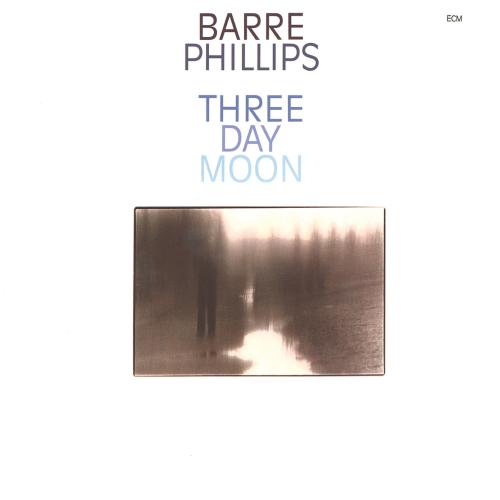
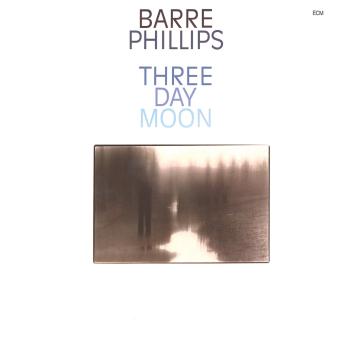
Three Day Moon (Remastered) Barre Phillips
Album Info
Album Veröffentlichung:
1978
HRA-Veröffentlichung:
30.01.2026
Das Album enthält Albumcover
Entschuldigen Sie bitte!
Sehr geehrter HIGHRESAUDIO Besucher,
leider kann das Album zurzeit aufgrund von Länder- und Lizenzbeschränkungen nicht gekauft werden oder uns liegt der offizielle Veröffentlichungstermin für Ihr Land noch nicht vor. Wir aktualisieren unsere Veröffentlichungstermine ein- bis zweimal die Woche. Bitte schauen Sie ab und zu mal wieder rein.
Wir empfehlen Ihnen das Album auf Ihre Merkliste zu setzen.
Wir bedanken uns für Ihr Verständnis und Ihre Geduld.
Ihr, HIGHRESAUDIO
- 1 A-i-a 09:39
- 2 Ms. P. 04:59
- 3 La Folle 05:17
- 4 Brd 08:38
- 5 Ingul-Buz 03:54
- 6 S.C. & W. 09:25
Info zu Three Day Moon (Remastered)
Three Day Moon is an album by American jazz bassist Barre Phillips recorded in March 1978 and released on ECM later that year. The quartet features guitarist Terje Rypdal, Dieter Feichtner on synthesizer and percussionist Trilok Gurtu.
"I have said it before and I will say it again: Barre Phillips is one of ECM’s most underrecognized treasures. A maverick of the upright bass, his is a mind in which one revels getting lost. This follow-up to 1976’s Mountainscapes is the genesis to the latter’s messiah. From Dieter Feichtner’s opening synth in “A-i-a” and its attendant bass line, we are immediately engaged in a dialogue that is untranslatable except via the grace of its performance. Electric guitar accents from Terje Rypdal, who feels right at home here, billow backwards from the stratosphere into fissures of sonic earth. Rypdal swaps axe for organ in “Ms. P.,” unfurling a shimmering heat in which the breath of bass turns to steam. Even spacier touches await us in “La Folle” and “Ingulz-Buz.” Farther-reaching abstractions mesh into the neutral colors of electric guitar and bowed bass, respectively, throughout these intertidal interludes. “Brd” puts me in mind of Paul Schütze’s Stateless (especially the track “Cool Engines”): strung by a steady bass line and tabla, the latter courtesy of Trilok Gurtu, and Rypdal’s continued ploys, each bead reveals new insights with every listen. If Rypdal has been a key figure in the album’s narrative thus far, for the final “S. C. & W.” he morphs into a demigod. Backed by an insectile arpeggiator, alongside bombilations from bass, Rypdal gets tricky with the effects, at times lapsing into R2-D2-like articulations, but always with integrity. An emblematic closer.
Grandiose, cinematic, and meticulously constructed, Three Day Moon once more proves Phillips to be one of jazz’s best-kept secrets. The album also sports one of the most evocative ECM sleeves of the seventies, with sonic innards to match." (ecmreviews.com)
Barre Phillips, double bass
Terje Rypdal, guitar, guitar synthesizer, organ
Dieter Feichtner, synthesizer
Trilok Gurtu, tabla, percussion
Digitally remastered
Barre Phillips
who was born in 1934 in California but has lived in the south of France since the early 1970s, has been at the forefront of successive revolutions in improvised music. He initially followed an academic career to the age of 25, until one day, as he puts it, he “just flipped” and decided that he would pursue his passion for music “come hell or high water”.
Ornette Coleman set him on his jazz path around 1960 and he was soon working the extremes of the “New Thing”, playing improvised chamber music with Jimmy Guiffre and freely expressive “fire music” with Archie Shepp. In London in the late 1960s he played with John Stevens’ history-making Spontaneous Music Ensemble and with the South African musicians around Chris McGregor. He then co-founded the powerhouse group The Trio with John Surman and Stu Martin, which appeared on Mountainscapes. Phillips’ first recording for ECM, however, was the 1971 duo album Music for Two Basses with Dave Holland, the first duo for basses issued on any label (“a fine record by two masters of the instrument”, BBC).
After further recordings for the label with Surman, and with Terje Rypdal, and the solo bass album, Call Me When You Get There, Phillips experimented with music for bass, percussion and tape on Aquarium Rain and mediated between Evan Parker and Paul Bley on Time Will Tell and Sankt Gerold, the latter a live album, taped at the Austrian mountain monastery. John Fordham, writing about this album in the Guardian, praised Phillips for “on the one hand swirling, smoky bowed textures and on the other great tension between his precision of pitch and buzzing-bee abstractions”. The bassist also collaborated with Joe and Mat Maneri on two ECM discs, Tales of Rohnlief and Angles of Repose, the second of which was recorded at the ancient chapel of Sainte Philomène, which adjoins Phillips’s home in Puget-Ville.
“I play everything based on what my ear suggests I play, with no objective editing. And my ear is fed by a pool of accumulated musical experiences stored in my memory, mental memory and muscle memory. My active role is to do the best I can to play on my instrument what my ear is suggesting.”
Dieses Album enthält kein Booklet