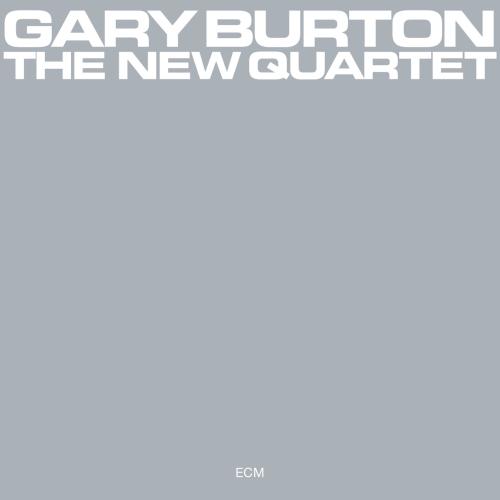
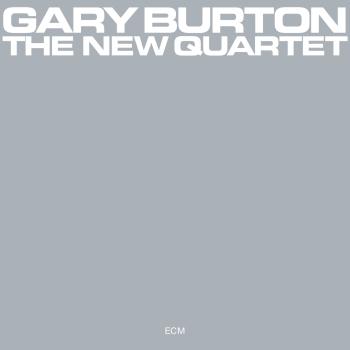
The New Quartet (Remastered) Gary Burton, Mick Goodrick, Abraham Laboriel, Harry Blazer
Album Info
Album Veröffentlichung:
1973
HRA-Veröffentlichung:
30.01.2026
Label: ECM Records
Genre: Jazz
Subgenre: Contemporary Jazz
Interpret: Gary Burton, Mick Goodrick, Abraham Laboriel, Harry Blazer
Das Album enthält Albumcover
Entschuldigen Sie bitte!
Sehr geehrter HIGHRESAUDIO Besucher,
leider kann das Album zurzeit aufgrund von Länder- und Lizenzbeschränkungen nicht gekauft werden oder uns liegt der offizielle Veröffentlichungstermin für Ihr Land noch nicht vor. Wir aktualisieren unsere Veröffentlichungstermine ein- bis zweimal die Woche. Bitte schauen Sie ab und zu mal wieder rein.
Wir empfehlen Ihnen das Album auf Ihre Merkliste zu setzen.
Wir bedanken uns für Ihr Verständnis und Ihre Geduld.
Ihr, HIGHRESAUDIO
- 1 Open Your Eyes, You Can Fly 06:38
- 2 Coral 04:08
- 3 Tying Up Loose Ends 05:09
- 4 Brownout 06:31
- 5 Olhos De Gato 05:36
- 6 Mallet Man 07:09
- 7 Four Or Less 06:08
- 8 Nonsequence 04:30
Info zu The New Quartet (Remastered)
Gary Burton gilt nicht nur als einer der ganz großen Innovatoren des Vibraphonspiels in der modernen Jazzära, sondern war auch immer ein äußerst erfolgreicher Entdecker und Förderer von Talenten. Zwei dieser Talente stellte er 1973 auf dem Album “The New Quartet” vor: den Bassisten Abraham Laboriel und den Gitarristen Mick Goodrick. Während Goodrick zuvor immerhin schon eine Aufnahme mit Woody Hermans “Young Thundering Herd” gemacht hatte, war “The New Quartet” die allererste Aufnahme für Laboriel, der schon bald zu einem der gefragtesten und stilistisch vielseitigsten Sessionmusiker avancieren sollte. “Es muss betont werden, dass Laboriel mit seinem erstaunlichen Bassspiel wie ein Künstler klingt, dem eine große Zukunft bevorsteht”, schrieb Melody Maker vorausschauend. Auch Goodrick konnte sich auf dem Album, dessen Repertoire Kompositionen von Burton-Gefährten wie Keith Jarrett, Chick Corea, Carla Bley und Mike Gibbs sowie natürlich dem Bandleader selbst enthielt, glänzend in Szene setzen. Sein Portefeuille erweiterte der Gitarrist in den folgenden Jahren durch Aufnahmen mit u.a. Jack DeJohnette, Charlie Haden und Steve Swallow sowie ein eigenes Soloalbum für ECM. Komplettiert wurde das Quartett durch den Schlagzeuger Harry Blazer, der anschließend u.a. Freddie Hubbard, Michel Legrand, Doc Severinsen, Diana Ross, Paul Anka, Johnny Mathis und Lee Ritenour im Studio und auf Tourneen begleitete. Für Gary Burton, der ein paar Monate zuvor im Duo mit Chick Corea und dem gemeinsamen Album “Crystal Silence” seinen Einstand bei ECM gegeben hatte, war "The New Quartet" der Auftakt zu einer langen fruchbaren Zusammenarbeit mit dem Produzenten Manfred Eicher, die bis tief in die 1980er Jahre hineinreichte.
Gary Burton, Vibraphon
Michael Goodrick, Gitarre
Abraham Laboriel, Bass
Harry Blazer, Schlagzeug
Digital remastert
Gary Burton
Born in 1943 and raised in Indiana, Gary Burton taught himself to play the vibraphone, developing a unique approach that set a new standard for four-mallet playing. At the age of 17, he made his recording debut in Nashville, Tennessee, with guitarists Hank Garland and Chet Atkins. Two years later, Burton left his studies at Berklee College of Music to join George Shearing and subsequently Stan Getz, with whom he worked from 1964-1966.
As a member of Getz’s quartet, Burton won Down Beat magazine’s Talent Deserving of Wider Recognition award in 1965. By the time he left Getz to form his own quartet in 1967, Burton had also recorded three albums under his name for RCA. Borrowing rhythms and sonorities from rock music, while maintaining jazz’s emphasis on improvisation and harmonic complexity, Burton’s first quartet attracted large audiences from both sides of the jazz-rock spectrum. Such albums as Duster and Lofty Fake Anagram established Burton and his band as progenitors of the jazz fusion phenomenon, and Down Beat magazine awarded Burton its Jazzman of the Year award in 1968. During his subsequent association with the ECM label (1973-1988) the Burton Quartet expanded to include the young Pat Metheny on guitar, and the band began to explore a repertoire of modern compositions.
In the 1970s, Burton also began to focus on more intimate contexts for his music. His 1971 album Alone at Last, a solo vibraphone concert recorded at the 1971 Montreux Jazz Festival, was honored with a Grammy Award. Burton also turned to the rarely heard duo format, recording with bassist Steve Swallow, guitarist Ralph Towner, and most notably with pianist Chick Corea, thus cementing a long personal and professional relationship that has garnered an additional two Grammy Awards.
Also in the 1970s, Burton began his career with Berklee College of Music in Boston. Burton began as a teacher of percussion and improvisation classes at Berklee in 1971. In 1985 he was named Dean of Curriculum. In 1989, he received an honorary doctorate of music from the college, and in 1996 he was appointed Executive Vice President.
Burton recorded for GRP records in the 1980s and ’90s. In 1990, he paired up again with his former protŽgŽ Metheny for Reunion, which landed him the top spot on Billboard magazine’s jazz chart. Burton is now recording for Concord Records. Departure (Gary Burton & Friends) was released in 1997 by Concord Records as well as Native Sense, a collaboration with Chick Corea, which garnered a Grammy Award in 1998. Also in 1997, Burton recorded his second collection of tango music, Astor Piazzolla Reunion, featuring the top tango musicians of Argentina, followed by Libertango, another collection of Piazzolla music. His 1998 Concord release, Like Minds, featuring his frequent collaborators Chick Corea, Pat Metheny, Roy Haynes, and Dave Holland, was honored with a Grammy, Burton’s fifth. Gary’s vibraphone tribute CD, For Hamp, Red, Bags and Cal, will be released in March 2001 on Concord.
Dieses Album enthält kein Booklet