




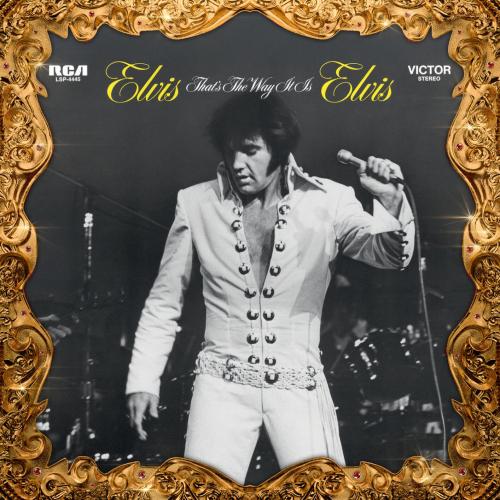
That's the Way It Is (Stereo Remastered) Elvis Presley
Album info
Album-Release:
1970
HRA-Release:
19.02.2026
Album including Album cover
I`m sorry!
Dear HIGHRESAUDIO Visitor,
due to territorial constraints and also different releases dates in each country you currently can`t purchase this album. We are updating our release dates twice a week. So, please feel free to check from time-to-time, if the album is available for your country.
We suggest, that you bookmark the album and use our Short List function.
Thank you for your understanding and patience.
Yours sincerely, HIGHRESAUDIO
- 1 I Just Can't Help Believin' (Live) 04:34
- 2 Twenty Days and Twenty Nights 03:15
- 3 How the Web Was Woven 03:25
- 4 Patch It Up 03:51
- 5 Mary In the Morning 04:11
- 6 You Don't Have to Say You Love Me 02:29
- 7 You've Lost That Loving Feeling (Live at The International Hotel, Las Vegas) 04:22
- 8 I've Lost You (Live) 03:41
- 9 Just Pretend (Live) 04:02
- 10 Stranger In the Crowd 03:46
- 11 The Next Step Is Love 03:31
- 12 Bridge Over Troubled Water 04:35
- 13 I've Lost You (Single Version) 03:30
- 14 Patch It Up (Single Version) 03:08
Info for That's the Way It Is (Stereo Remastered)
In essence, this was the soundtrack album for the new movie, a cinema verité MGM documentary memorializing Elvis’ August 1970 Las Vegas engagement. Movie director Denis Sanders filmed Elvis in rehearsal in Los Angeles, through additional rehearsals in Las Vegas, and in performance at six of the shows during his August/September run. While nearly all the songs could have been sung in live performance, the majority were represented on the album by versions recorded in Nashville in June. The album nonetheless possessed an emotional integrity and an understated grace in marked contrast to the slapdash budget collections, but it sold about the same, maintaining the very respectable half-a-million level.
"That's the Way It Is is arguably where Elvis Presley's discography gets very confusing. Sharing a title with Denis Sanders' 1970 documentary of Elvis' return to the stage, That's the Way It Is in its original 1970 LP incarnation isn't precisely a soundtrack to the film. In fact, only a third of the album captures Presley live on-stage in Vegas, with the remainder of the record derived from sessions he recorded in Nashville just a few months prior to launching his long-standing gig at the International Hotel. Vegas looms large over Elvis' legend in the '70s and many of the clichés -- the jumpsuits, the splashy arrangements of contemporary standards, the snazzy melodies of his old hits -- were born on That's the Way It Is, either on film or on the record. In its original LP incarnation, this wasn't especially apparent due to the record's reliance on the Nashville sessions, where Elvis recorded a fair share of perfectly pleasant middle-of-the-road material pitched halfway between Hollywood and Music City. These tunes -- "Twenty Days and Twenty Nights," "How the Web Was Woven," "Just Pretend," and "Stranger in the Crowd" -- are easy to spot because they're by songwriters without marquee names (Colonel Tom Parker insisted Elvis take a larger percentage of publishing, which kept away many writers) and, more tellingly, on the 2014 expansions of the album -- available in a double-disc set, which presents a remastered version of the original album supplemented by single versions of four tracks ("I've Lost You," "The Next Step Is Love," "You Don't Have to Say You Love Me," "Patch It Up"), five outtakes of alternate tracks, then a full set from August 12; there is also a gigantic eight-CD/two-DVD box that replicates that expanded first disc and six full sets recorded during the filming of the documentary, plus a disc of rehearsals -- these are the songs that don't appear in the live set. They may not have been part of Presley's repertoire but they do indicate how he was shifting away from the soulful, funky sound inspired by his 1968 comeback into something that felt showbiz. The live recordings, though, show that he was still performing with passion, figuring out what worked on-stage and what didn't after his long hiatus from performing. Again, this isn't so apparent on the 1970 LP, which was basically a good studio album that essayed Elvis' new persona for the coming decade, but all the various expanded editions (which include a 2000 special edition that adds a hefty dose of live material) capture the King starting to relax and enjoy his reign yet again. Certainly, the eight-disc set illustrates this in spades, and while it's undoubtedly one for the devoted, it nevertheless isn't overkill because it captures a peerless performer putting his amazing band through the paces. It's wonderful music that actually is more valuable now than it was at the time: Elvis would record more great music in the next few years, but this record -- especially in its 2014 expansion -- captures him at a pivotal moment, when he retained the power of his 1968 comeback and had yet to succumb to all the glitz of Vegas." (Stephen Thomas Erlewine, AMG)
Elvis Presley, lead vocals, guitar, harmony vocals on “Bridge Over Troubled Water”
James Burton, lead guitar
Chip Young, rhythm guitar
Charlie Hodge, harmony vocals, acoustic rhythm guitar
David Briggs, piano, organ on "How the Web Was Woven"
Norbert Putnam, bass
Jerry Carrigan, drums
Charlie McCoy, organ, harmonica, marimba on "Just Pretend”, “Twenty Days and Twenty Nights”, and “Bridge Over Troubled Water”
Farrell Morris, percussion, vibraphone
Weldon Myrick, steel guitar on "How the Web Was Woven"
The Jordanaires, backing vocals
The Imperials, backing vocals
Digitally remastered
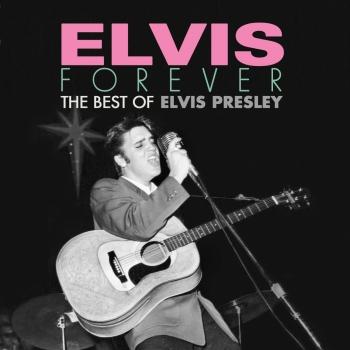
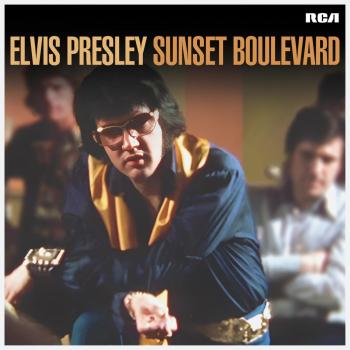
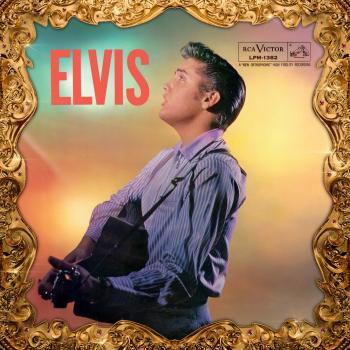
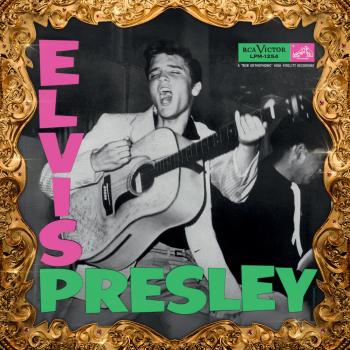
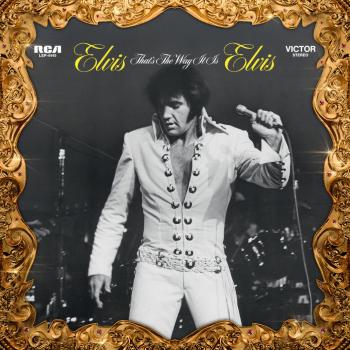
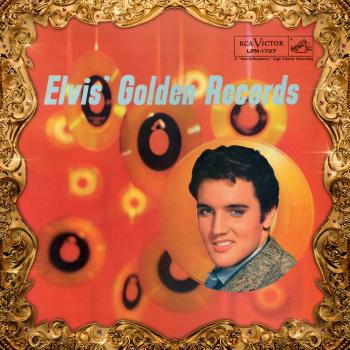
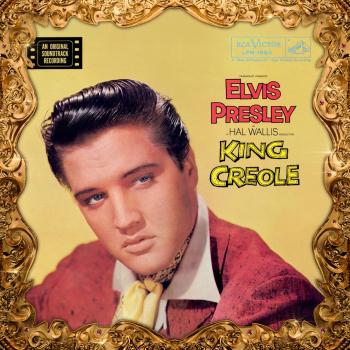
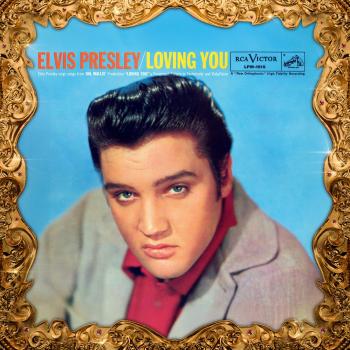
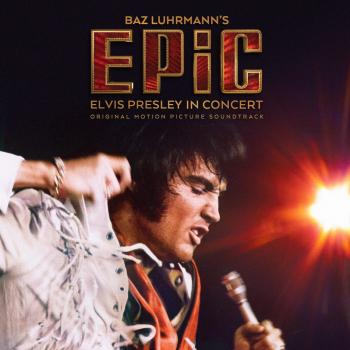
Elvis Presley
was an American actor and singer, born on January 8, 1935, in Mississippi. He played a key role in popularizing rockabilly and later rock ‘n’ roll, and is considered one of the greatest icons of all time. The King, who died on August 16, 1977, remains the second-biggest album seller in music history.
A talented and precocious artist
Elvis Aaron Presley was born on January 8, 1935, in Tupelo and showed a passion for music even as a child. At the age of ten, he took part in his first singing competition dressed as a cowboy and came fifth at the Mississippi-Alabama Fair and Dairy Show. On his 11th birthday, his family decided to give him his first guitar as a gift. Two of his uncles took the opportunity to give him guitar lessons, while his mother helped him improve his singing.
In 1946, Elvis Presley met Mississippi Slim, a local musician and radio host who helped him perfect his guitar chords. Seeing that Elvis had talent, Mississippi Slim decided to have him perform on his show, giving him his first public performance even though he wasn't even 12 years old! In 1953, after finishing school, he made the final decision to pursue a career in music.
A determined teenager
True to his dream of becoming a musician, Elvis Presley decided to visit the various record companies in Memphis to record his first single. When he arrived at Sun Records, he paid four dollars of his own money for his first recording! At the age of 18, he sang two cover versions: My Happiness and That's When Your Heartaches Begin.
The beginning of a great career
Elvis Presley then recorded several singles with Scotty Moore and Bill Black, who would later become his musicians. On July 5, 1954, in the middle of recording, Elvis Presley began to accompany his songs with body movements that Sam Philips found overwhelming. Considering these gestures to be a real revolution, the producer of Sun Records decided to launch the trio on the road to success.
The three men performed countless times and embarked on a local tour that lasted until 1955 to make themselves known to a wider audience. The success was huge. Elvis Presley's footwork was considered scandalous, but it attracted young audiences. Elvis Presley's sound, a mixture of blues and country music, was heard throughout the southwestern United States and soon became rockabilly. The group then signed with RCA Records, which created the “Elvis Presley Music” label specifically to record the phenomenon's first studio albums.
By 1958, Elvis Presley had become increasingly popular thanks to his albums Elvis Presley (1956) and Elvis (1956) and his film soundtracks: Loving You (1957) and the incredible King Creole (1958). After his appearance on The Ed Sullivan Show on September 9, 1956, he became a national star. That evening, 60 million Americans watched Elvis's rendition of Love Me Tender, and over a million copies of the single were pre-ordered after the show.
The King: the birth of a legend
In 1956, Elvis Presley wanted to try his hand at other things and signed a contract with Paramount Pictures to become an actor. Despite mixed reviews, the first films in which Elvis starred were real commercial successes thanks to his fame. He then made several more films, such as Cat on a Hot Tin Roof (1956) and King Creole (1958), before having to complete his military service from 1958 to 1960.
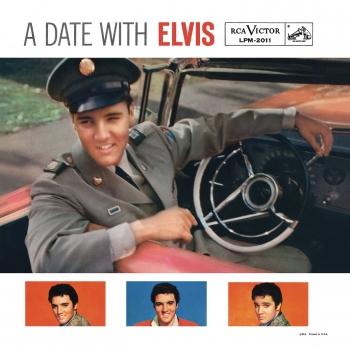
Despite his absence, his producers released the albums For LP Fans Only (1959) and A Date with Elvis (1959), featuring songs recorded years earlier.
In 1960, after returning from the army, he released the albums Something for Everybody (1961) and Pot Luck (1962), before signing an acting contract with Hollywood. The production company was eager to give him the leading roles in the films for which he was to write the soundtrack. He then starred in The Sheriff of These Ladies (1962), The Man for Everything (1964), and Tickle Me (1965).
At the top of the sales charts, despite a career break!
Although he put his music career on hold from 1960 to 1968, Elvis Presley managed to get ten original movie soundtracks to the top of the singles sales charts! These include Girls! Girls! Girls (1962) and Fun in Acapulco (1963).
The year 1968 is also considered symbolic of the King's return to his roots. In the show entitled Elvis, he is celebrated by the audience. The following year, he releases his first album in nine years: From Elvis in Memphis (1969). This album, which features more soul and less rock ‘n’ roll, demonstrates the King's ability to adapt to the musical trends of the time.
Elvis is determined to return to the stage with concerts and signs a contract for 57 dates over several years at the International Hotel in Las Vegas. At the first of these concerts on July 31, 1969, the audience is captivated by his performance and gives him three standing ovations.
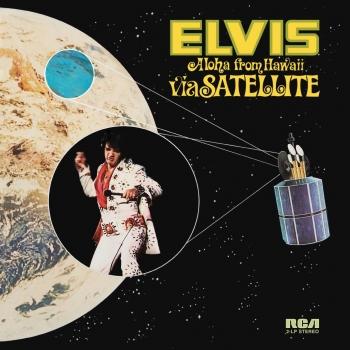
In parallel with the contract with the hotel in Las Vegas, Elvis resumes his tours of the USA and releases seven albums between 1970 and 1973, including Elvis Country (I'm 10,000 Years Old) (1971) and Raised on Rock (1973). In the same year, he decided to give the first concert ever to be broadcast via satellite around the world. This took his career to global dimensions. In his white suit with the eagle on the back, Elvis became The King forever and released a double album: Aloha From Hawaii via Satellite (1973).
Due to excessive medication use, he died of a heart attack on August 16, 1977, in Memphis, the city where it all began.
Elvis Presley's awards:
Elvis Presley received an impressive number of awards throughout his career. In 2010, the total number of albums and singles he sold was estimated at over 600 million! His album Elvis' Christmas Album (1957), for example, went platinum nine times. In total, he received 144 awards for his singles and albums during his career, which spanned just over 20 years.
Elvis is also the American singer who has appeared most frequently in the charts of best-selling singles in the US. He placed 38 singles in the Top 10, 18 at No. 1 and 114 in the Top 40! He also spent more than 80 weeks at the top of the singles bestseller list during his career.
His musical awards include three Grammy Awards for Best Contemporary Christian Music Performance in 1968, 1973, and 1975, as well as a Grammy Award in 1971 for his life's work. Today, he has a star on the Walk of Fame on Hollywood Boulevard and belongs to three major music institutions: the Rock and Roll Hall of Fame, the Country Music Hall of Fame, and the Gospel Music Hall of Fame.
On the evening of Elvis Presley's death, US President Jimmy Carter summed up the singer's life in a now famous sentence: “Elvis may be gone, but his legend will live on forever.”
This album contains no booklet.