


Worst Case Scenario (30th Anniversary Edition Remastered) dEUS
Album info
Album-Release:
2026
HRA-Release:
06.03.2026
Album including Album cover
- 1 Intro 00:24
- 2 Suds & Soda 05:14
- 3 W.C.S. (First Draft) 05:05
- 4 Jigsaw You 02:26
- 5 Morticiachair 04:23
- 6 Via 04:12
- 7 Right as Rain 04:27
- 8 Mute 03:57
- 9 Let's Get Lost 04:24
- 10 Hotellounge (Be the Death of Me) 06:23
- 11 Shake Your Hip 00:41
- 12 Great American Nude 05:39
- 13 Secret Hell 04:59
- 14 Divebomb Djingle 03:02
- 15 Zea (Intro Replica) 00:37
- 16 Zea 04:58
- 17 Texan Coffee 01:08
- 18 It. Furniture In The Far West 00:51
- 19 Violins And Happy Endings 04:58
- 20 Great American Nude (Strip Mix) 03:42
- 21 Niche 02:03
- 22 Whose Vegas (Is It Anyway) 03:51
- 23 Let Go 02:00
- 24 Jigsaw You (Live) 04:15
- 25 Morticiachair (Live) 04:28
- 26 Secret Hell (Live) 05:00
- 27 Mute (Live) 05:03
Info for Worst Case Scenario (30th Anniversary Edition Remastered)
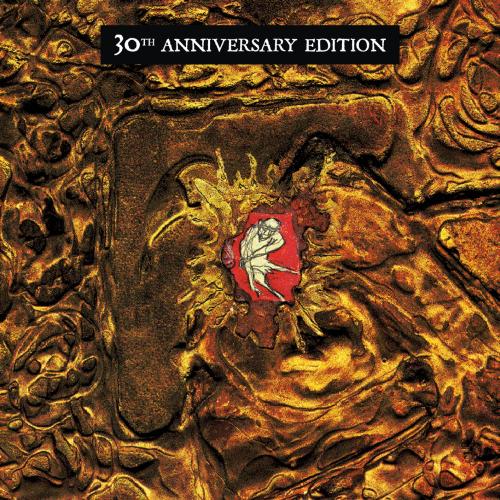
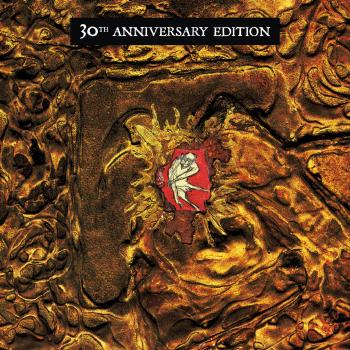
"Worst Case Scenario" is the debut studio album by Belgian rock band dEUS released in 1994. The cover art was designed by guitarist Rudy Trouvé. It contains the single "Suds & Soda", which became an underground hit and a fan favorite.
This edition features the original album, B Sides and rarities.
Produced by Peter Vermeersch and Pierre Vervloesem. THE stunning debut album from 1994 that bought Belgian music to an international audience.
"About the only thing wrong with dEUS' full-length debut is that the band put its best foot forward right at the start with the great "Suds & Soda." A tense, energetic rip with Klaas Janzoons' violin the final touch that sends everything over the top, it has all the wired energy of early-'90s rock, but with its own arty edge. The only thing quite like it might have been PJ Harvey's early efforts, but with more feedback throughout the mix and a fine organ break. From that great start, the five-piece spent its time exploring its own interesting rock zone, referencing back to classic rock influences and jazz pioneers as much as any of its many frazzled contemporaries. It's a bit facile to say that if Tom Waits were a young guy in 1992 he might have formed this band, but there's something agreeably impassioned and rough about Worst Case Scenario which calls to mind Waits' own avant- garage jazz efforts in the mid-'80s. Having songs that sample Frank Zappa ("Little Umbrellas," surfacing in the slow burn of the title track) and Don Cherry gives an idea of both the members' backgrounds, and the desire to see what to do with them rather than simply be reverential. Tom Barman's singing hits both loud, full-bodied shrieks, and low-and-slow as needed, while the band in general strike a great balance between straight-ahead performance and subtle studio trickery, especially courtesy of percussionist Julle De Borgher, playing everything from drums to "gas heating." When the quintet turns in a sassy, snarling performance, as on "Morticiachair," it's not too hard to see them as European cousins of Girls Against Boys or even Rocket From the Crypt. Alternately, for songs like the "Right as Rain," dEUS become the best late-night, last-drink band out there, while the building crunch of "Hotellounge" finds them able to combine the two extremes just so." (Ned Raggett, AMG)
Tom Barman, vocals, guitar, piano
Rudy Trouvé, guitar, vocals, piano, steel plate
Stef Kamil Carlens, bass, vocals, guitar
Klaas Janzoons, violin, vocals
Julle de Borgher, drums, metallophone, gasheating, timpani, maracas, guitar, vocals
Digitally remastered
dEUS
The Belgian indie scene, experts agree, is considered the most creative as well as progressive in all of Europe - and dEUS are its commercial and artistic spearhead. In this scene there are numerous musicians who combine the most diverse genres in several formations in parallel and are often active in other art forms as well. This was also the case when dEUS was founded in 1991: the core of this extremely open-minded band was formed by the documentary filmmaker Tom Barman, the painter and sculptor Rudy Trouvé, and the fashion designer Stef Kamil Carlens. The three, supplemented by two other musicians, including violinist Klaas Janzoons, who is still a member of the band today, were socialized so differently artistically that a joint result almost automatically had to break all known boundaries.
Thus, the debut album "Worst Case Scenario", released in 1994, already showed a breathtaking stylistic heterogeneity between jazz, folk, noise, alternative and experimental rock, which could not hide its clear reference to artists like Frank Zappa, Captain Beefheart or Tom Waits. The band then went almost wilder on their second album, "In a Bar, Under the Sea" (1996), a masterpiece of versatility that ultimately could only be blamed for one thing: it was hard to imagine that all this different music should come from a single band. Despite this challenging experimentation and thanks to overwhelming reviews from the experts, however, dEUS achieved an international breakthrough with these two albums.
This was followed by the first of several caesuras in the band's now 31-year history. Trouvé and Carlens left the band and founded their own highly acclaimed bands Kiss My Jazz and Zita Swoon. In their place as creative counterparts to bandleader Tom Barman came the Scotsman Craig Ward, and with him came a new approach: How would it be to present all these genres not just side by side, but closely interwoven with each other to generate a work of art that, for all its versatility, sounded rounded, coherent and homogeneous? The first result of this second dEUS era was called "The Ideal Crash" (1999) and is considered one of the best albums in the history of indie rock. Every single song turned out to be a compositional jewel, carefully but purposefully equipped with the necessary details. No wonder that dEUS took a break of several years after this over-work. After that, all members pursued other music or art projects.
It wasn't until 2004 that dEUS reunited, once again in a heavily modified version; of the founding members, only Barman and Janzoons have been around since then, while Barman recruited the other musicians from the multitude of outstanding bands from Antwerp and Ghent, including Soulwax drummer Stéphane Misseghers and musical jack-of-all-trades Mauro Pawlowski, who had explored the boundaries of what was absolutely feasible and audible in indie rock with more than half a dozen formations. Since then, four more dEUS albums have been released, all of which have been acclaimed by press and fans alike, giving dEUS a special place in European indie rock history as a rarely consistent and consistent band that simply cannot make an average album. Expectations are correspondingly high for their upcoming eighth record - the first since their last long-player to date, 2012's "Following Sea".
This album contains no booklet.