





Magische Töne Jonas Kaufmann
Album info
Album-Release:
2026
HRA-Release:
10.04.2026
Label: Sony Classical
Genre: Classical
Subgenre: Vocal
Artist: Jonas Kaufmann
Composer: Emmerich Kalman (1882-1953), Franz Lehar (1870-1948), Paul Abraham (1892-1960), Fred Raymond (1900-1954), Nico Dostal (1895-1981), Jenö Huszka (1875-1960), Ferenc Erkel (1810-1893), Karl Goldmark (1830-1915)
Album including Album cover Booklet (PDF)
I`m sorry!
Dear HIGHRESAUDIO Visitor,
due to territorial constraints and also different releases dates in each country you currently can`t purchase this album. We are updating our release dates twice a week. So, please feel free to check from time-to-time, if the album is available for your country.
We suggest, that you bookmark the album and use our Short List function.
Thank you for your understanding and patience.
Yours sincerely, HIGHRESAUDIO
- Emmerich Kálmán (1882 - 1953): Komm, Zigány (From "Gräfin Mariza"):
- 1 Kálmán: Komm, Zigány (From "Gräfin Mariza") 05:42
- Komm mit nach Varasdin! (From "Gräfin Mariza"):
- 2 Kálmán: Komm mit nach Varasdin! (From "Gräfin Mariza") 03:42
- Mondd meg hogy imádom a pesti noket "Grüß mir mein Wien" (From "Gräfin Mariza"):
- 3 Kálmán: Mondd meg hogy imádom a pesti noket "Grüß mir mein Wien" (From "Gräfin Mariza") 05:16
- Liebe singt ihr Zauberlied (From "Kaiserin Josephine"):
- 4 Kálmán: Liebe singt ihr Zauberlied (From "Kaiserin Josephine") 03:37
- Tanzen möcht' ich, jauchzen möcht ich (From "Die Csárdásfürstin"):
- 5 Kálmán: Tanzen möcht' ich, jauchzen möcht ich (From "Die Csárdásfürstin") 03:15
- Tief wie der Bergsee...so verliebt kann ein Ungar nur sein (From "Der Teufelsreiter"):
- 6 Kálmán: Tief wie der Bergsee...so verliebt kann ein Ungar nur sein (From "Der Teufelsreiter") 04:45
- Franz Lehár (1870 - 1948): Es steht ein Soldat am Wolgastrand (From "Der Zarewitsch"):
- 7 Lehár: Es steht ein Soldat am Wolgastrand (From "Der Zarewitsch") 04:51
- O Mädchen, mein Mädchen, wie liebe ich dich! (From "Friederike"):
- 8 Lehár: O Mädchen, mein Mädchen, wie liebe ich dich! (From "Friederike") 02:50
- Ich trete ins Zimmer...Immer nur lächeln (From "Das Land des Lächelns"):
- 9 Lehár: Ich trete ins Zimmer...Immer nur lächeln (From "Das Land des Lächelns") 05:04
- Wer hat die Liebe uns ins Herz gesenkt (From "Das Land des Lächelns"):
- 10 Lehár: Wer hat die Liebe uns ins Herz gesenkt (From "Das Land des Lächelns") 04:55
- Schön wie die blaue Sommernacht (From "Giuditta"):
- 11 Lehár: Schön wie die blaue Sommernacht (From "Giuditta") 04:09
- Paul Abraham (1892 - 1960): Ein Paradies am Meerestrand (From "Die Blume von Hawaii"):
- 12 Abraham: Ein Paradies am Meerestrand (From "Die Blume von Hawaii") 01:51
- Will Dir die Welt zu Füßen legen (From "Die Blume von Hawaii"):
- 13 Abraham: Will Dir die Welt zu Füßen legen (From "Die Blume von Hawaii") 03:05
- Pardon Madame (From "Viktoria und ihr Husar):
- 14 Abraham: Pardon Madame (From "Viktoria und ihr Husar) 02:24
- Nur ein Mädel gibt es auf der Welt (From "Viktoria und ihr Husar"):
- 15 Abraham: Nur ein Mädel gibt es auf der Welt (From "Viktoria und ihr Husar") 03:39
- Párdon, hogy bocsánat..Sing Sing (From "Julia"):
- 16 Abraham: Párdon, hogy bocsánat..Sing Sing (From "Julia") 02:46
- Der schönste Gedanke auf Erden (From "Zigeuner der Nacht"):
- 17 Abraham: Der schönste Gedanke auf Erden (From "Zigeuner der Nacht") 02:47
- Fred Raymond (1900 - 1954): Die Juliska aus Budapest (From "Maske in Blau"):
- 18 Raymond: Die Juliska aus Budapest (From "Maske in Blau") 02:06
- Nico Dostal (1895 - 1981): Frag nur dein Herz, was Liebe ist (From "Die ungarische Hochzeit"):
- 19 Dostal: Frag nur dein Herz, was Liebe ist (From "Die ungarische Hochzeit") 03:14
- Jenö Huszka (1875 - 1960): Londonban hej (From "Bob herceg"):
- 20 Huszka: Londonban hej (From "Bob herceg") 03:34
- Ferenc Erkel (1810 - 1893): Hazam, hazam, te mindenem! (From "Bánk bán):
- 21 Erkel: Hazam, hazam, te mindenem! (From "Bánk bán) 03:28
- Karl Goldmark (1830 - 1915): Magische Töne, berauschender Duft (From "Die Königin von Saba"):
- 22 Goldmark: Magische Töne, berauschender Duft (From "Die Königin von Saba") 03:26
Info for Magische Töne
Berühmte Melodien aus Österreich-Ungarn: Das neue Album „Magische Töne“ von Jonas Kaufmann enthält einige der schönsten Operetten- und Opern-Melodien. Neben Evergreens von Emmerich Kálmán, Franz Lehár und Paul Abraham enthält es auch eine der beliebtesten Arien des Tenor-Repertoires: das titelgebende Magische Töneaus der Oper Die Königin von Saba von Karl Goldmark.
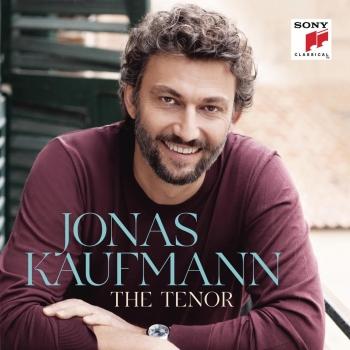
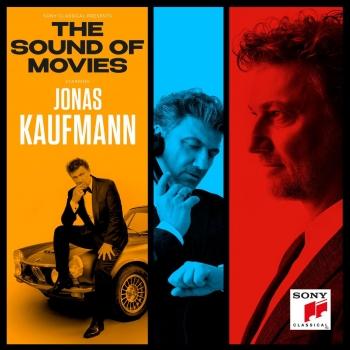
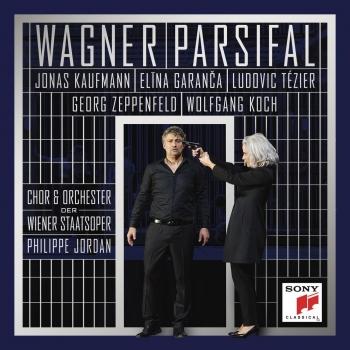
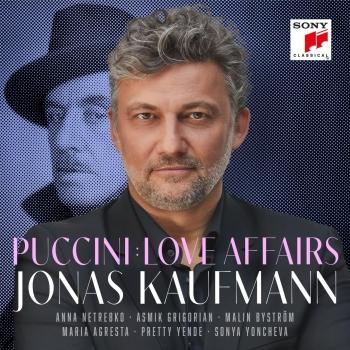
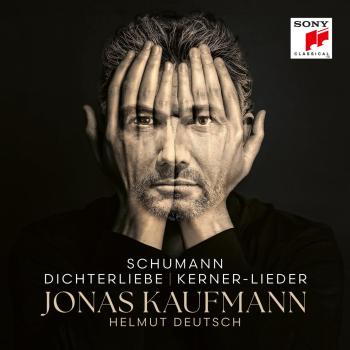

Jonas Kaufmann
Born in Munich, Germany, tenor Jonas Kaufmann is now internationally recognized as one of the most important artists of our day. He has made sensational débuts in recent seasons at many of the world’s leading opera houses, appearing at the Royal Opera Covent Garden in La Rondine opposite Angela Gheorghiu and in the 2007 new pro-duction of Carmen under Antonio Pappano. He has also appeared as Alfredo in La Traviata at the Metropolitan Opera and the Lyric Opera of Chicago, as well as in the new productions of the work at Paris’s Opéra-Bastille in 2007 and at the Teatro Alla Scala in Milan. He has sung Tamino in Die Zauberflöte at the Bavarian State Opera in Munich. the Vienna State Opera and the Metropolitan Opera, as Belmonte in Die Entführung aus dem Serail at the Salzburg Festival, and as Faust in La Damnation de Faust at the Theâtre Royal de la Monnaie in Brussels. Highlights of the 2007/2008 season included La Traviata opposite Anna Netrebko and his first Cavaradossi in Tosca under Antonio Pappano, both at the Royal Opera House, Covent Garden, Rodolfo in La Bohème at both the Berlin State Opera under Gustavo Dudamel and at the Zurich Opera, where he was also heard in new productions of Humperdinck’s Koenigskinder and Carmen as well as in La Traviata and Don Carlos. In January of 2008 Jonas Kaufmann’s first solo album for DECCA titled “Romantic Arias” became an immediate international best seller. The release was followed in February of 2008 by solo operatic concerts in Munich and Hamburg. In July of 2008 he sang a tremendously acclaimed recital at the Prinzregententheater in Munich.
Jonas Kaufmann began the 2008/2009 with his first performances of Des Grieux in Manon at the Lyric Opera of Chicago opposite Natalie Dessay, followed by his return to Paris as Florestan in the new production of Fidelio for the Opéra National de Paris and a recital, both at the Palais Garnier. In January of 2009 Kaufmann sang the Italian Tenor in the production of Der Rosenkavalier under Christian Thielemann in Baden Baden. He will return to the Zurich Opera in a new production of Tosca staged by Robert Carsen and conducted by Christoph von Dohnányi. Kaufmann will also sing La Traviata in Zurich, after which he will return to the Vienna State Opera in Manon and Tosca. In July of 2009 Kaufmann will sing his first performances of the title role in Lohengrin in a new production at the Bavarian State Opera pro-duced by Richard Jones and conducted by Kent Nagano. He will also appear there in La Traviata opposite Angela Gheorghiu. The current season has included solo operatic concerts in January 2009 at the Mannheim Rosengarten, the Berlin Philharmonic Hall, at the Megaron in Athens, Greece, and at the Théâtre des Champs-Elysées in March. Kaufmann made his début in Moscow in December of 2008 in a concert along with Dmitri Hvorostovsky, and also sang Beethoven’s Symphony No. 9 with the Munich Philharmonic conducted by Christian Thielemann. He dedicates part of each year to song recitals and this season is partnered by renowned pianist, Helmut Deutsch, in recitals in Paris, at the Palais Garnier, the Opera House in Zurich, the Vienna Konzerthaus, the Glyptoteket in Copenhagen, The Nationaltheater in Munich, and at the Haus fur Mozart at the Salzburg Festival.
Jonas Kaufmann completed his musical studies in his native Munich, participated in masterclasses with James King, Hans Hotter and Joseph Metternich and subsequently perfected his vocal technique with Michael Rhodes. He began his professional career at the State Theatre in Saarbruecken in 1994 and was soon invited to make débuts in such important German theaters as the Stuttgart Opera, the Hamburg State Opera as well as international débuts at the Lyric Opera of Chicago, the Paris Opéra and the Teatro alla Scala in Milan.
He made his Salzburg Festival début in 1999 in a new production of Busoni’s Dr. Faust and returned there in 2003 as Belmonte and for concerts of Beethoven’s Ninth Symphony with the Berlin Philharmonic. Kaufmann has been closely associated with the Zurich Opera since 2001; he has appeared there in several new productions which have included Idomeneo, La Clemenza di Tito, Schubert’s Fierrabras, Humperdinck’s Koenigskinder, izet’s Carmen and Monteverdi’s L’Incorozione di Poppea. Other roles in Zurich have included the Duke in Rigoletto, the title role in Gounod’s Faust, Florestan in Fidelio, Tamino in Die Zauberflöte and Belmonte in Die ntführung aus dem Serail. In 2006 he sang his first performances of the title role of Wagner’s Parsifal in Zurich followed by his début in 2007 there as Don Carlos. In 2006 Kaufmann also sang his first Walther von Stolzing in a concert performance of Die Meistersinger at the Edinburgh Festival conducted by David Robertson. He had previously been heard in Edinburgh as Max in Der Freischütz under Sir Charles Mackerras.
Jonas Kaufmann has appeared with some of the world’s leading conductors and orchestras. Among these engagements are performances with the Berlin Philharmonic under both Sir Simon Rattle and Nikolaus Harnoncourt, the Cleveland Orchestra under Franz Welser-Möst and the Vienna Philharmonic under Helmuth Rilling. In the summer of 2007 he sang Beethoven’s Symphony No.9 in Lucerne under Claudio Abaddo and subsequently made his Carnegie Hall début in October of 2007 in the same work.. In 2008 he also performed with the Cleveland Orchestra in Mahler’s Das Lied von der Erde with Franz Welser-Möst, in Verdi’s Requiem in Zurich under Daniele Gatti. His recitals of the song Literature have received high praise throughout Europe as well as in Japan.
In the autumn of 2009 Jonas Kaufmann will return to the Royal Opera House, Covent Garden in Don Carlos under Semyon Bychkov. He will open the 2009 season at the Teatro alla Scala in a new production of Carmen under Daniel Barenboim and will also sing the Verdi Requiem with La Scala in Milan, Paris and Moscow. Kaufmann will sing the new production of Tosca at the Bavarian State Opera where he also sings Lohengrin and Carmen. He will add the title role in Massenet’s Werther to his repertoire for the Opéra National in Paris and returns to the Metropolitan Opera in Tosca and Carmen. In July of 2010, Kaufmann will make his Bayreuth Festival début in a new production of Lohengrin.
Booklet for Magische Töne